

Oranger Crystals aka. Methyl Beta Napthyl Ketone Aroma Chemical
CAS# 93-08-3
Floral, Sweet, Powdery, Hawthorn, Neroli
Couldn't load pickup availability
In the world of perfumery, some precious gems are not mined from the earth, but crystallized from human ingenuity. Oranger Crystals, a classic creation from Givaudan, is one such gem. A synthetic compound, it emerged as an elegant and sustainable solution for the fragrance industry in the early 20th century. It became widely used thanks to its ability to effectively replace costly natural orange blossom materials, and especially for its outstanding stability in harsh media such as soap and detergents.
Behind its form-white to off-white solid crystals-lies a rich, sweet orange-blossom scent, carrying neroli-like nuances and a subtle fruity facet reminiscent of strawberry or grape. Because of its power and tenacity, Oranger Crystals has become both a fixative and a core building block in white-floral accords, particularly orange blossom and gardenia, helping shape this family in modern perfumery.
Description
Oranger Crystals is a statement of endurance and depth-a solid, dependable base note in the Floral family. It is not merely a scent, but a potent fixative: an anchor that keeps a fragrance’s “symphony” intact over time.
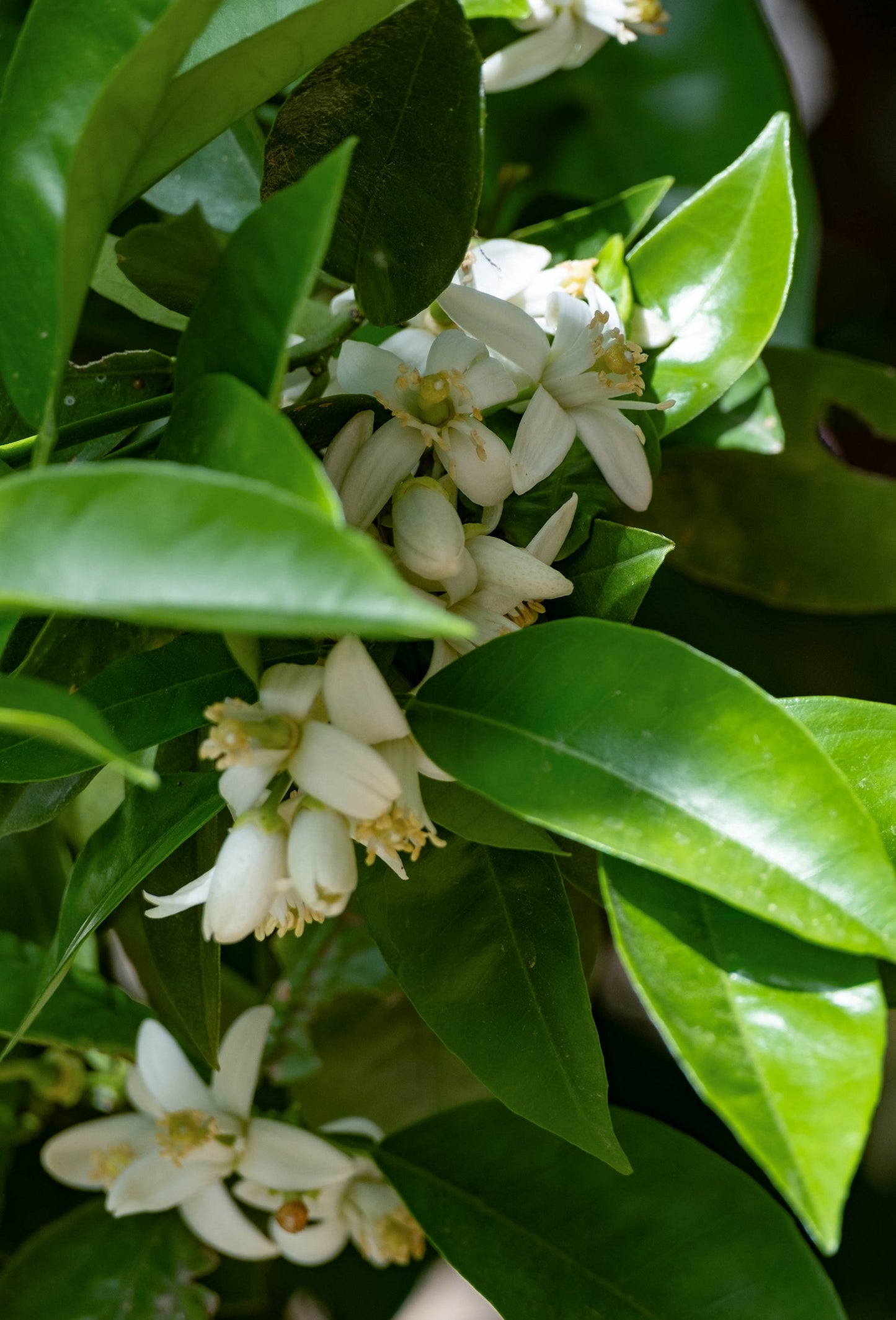
Its aroma paints a vivid picture of an orange grove at full bloom-sweet, warm, with beeswax-like tones and a hint of dried fruit. Its strength shows in its intensity and steady diffusion. Yet what is truly remarkable is its near-permanent longevity, said to last beyond 400 hours-meaning weeks on a blotter.
In formulas, it is used to build a firm base for Floral perfumes, especially when the goal is to emphasize orange blossom. It also acts as a skilled fixative, helping bright citrus top notes remain perceptible for longer. It is often paired with Methyl Anthranilate and Aurantiol to create a very full-bodied orange-blossom accord, or combined with citrus notes to extend their freshness. For practical use, perfumers typically dissolve Oranger Crystals in solvents such as DPG, DEP, or Benzyl Benzoate to make it easier to dose and incorporate during creation.
Applications
Oranger Crystals’ durability and versatility allow it to shine across many areas. It is commonly used in Oriental and Floral perfumes, and it also appears in body creams and shower gels. Its true strength, however, lies in soaps and detergents, where it proves exceptionally stable, does not discolor, and retains scent very well. Even in scented candles, its good heat resistance helps the fragrance remain true rather than shifting.
Use of this material follows safety guidelines, with typical dosage levels in fragrance compounds ranging from 0.5% to 5%. It is regarded as safe, non-phototoxic, and simply needs careful storage in a tightly sealed container to prevent sublimation.
Most classic orange-blossom perfumes and traditionally neroli-scented soaps carry the signature of Oranger Crystals to add thickness to the base. Steffen Arctander stated that it is among the most useful aroma chemicals for creating orange blossom and neroli effects. He praised its tenacity, its clearly floral character, and its significant fixative effect on citrus notes-calling it a foundational material in every perfumer’s toolkit.
4.91 / 5
(133) 133 total reviews
Share
Technical standards
Technical standards
| Lot 605169 | MFD 5/11/2026 | BBD 5/11/2028 |
| Melting point | ≤ 55.0°C | 54.7°C |
| Loss on drying | ≤ 0.5% | 0.04% |
| Purity | ≥ 99.0% | 99.89% |
Solubility @25˚C
Solubility @25˚C
| Solvent | Solubility (g/L) |
|---|---|
| ethanol | 64.43 |
| methanol | 72.11 |
| isopropanol | 32.03 |
| water | 0.31 |
| ethyl acetate | 461.94 |
| n-propanol | 59.34 |
| acetone | 304.3 |
| n-butanol | 43.4 |
| acetonitrile | 427.74 |
| DMF | 502.55 |
| toluene | 251.87 |
| isobutanol | 34.06 |
| 1,4-dioxane | 1154.62 |
| methyl acetate | 481.03 |
| THF | 568.25 |
| 2-butanone | 369.44 |
| n-pentanol | 47.91 |
| sec-butanol | 40.69 |
| n-hexane | 18.6 |
| ethylene glycol | 18.42 |
| NMP | 337.19 |
| cyclohexane | 21.63 |
| DMSO | 301.41 |
| n-butyl acetate | 287.33 |
| n-octanol | 36.55 |
| chloroform | 993.25 |
| n-propyl acetate | 282.16 |
| acetic acid | 114.85 |
| dichloromethane | 1348.26 |
| cyclohexanone | 452.21 |
| propylene glycol | 17.0 |
| isopropyl acetate | 180.58 |
| DMAc | 389.59 |
| 2-ethoxyethanol | 122.66 |
| isopentanol | 43.8 |
| n-heptane | 13.94 |
| ethyl formate | 209.94 |
| 1,2-dichloroethane | 1082.17 |
| n-hexanol | 64.02 |
| 2-methoxyethanol | 162.88 |
| isobutyl acetate | 150.27 |
| tetrachloromethane | 86.44 |
| n-pentyl acetate | 128.19 |
| transcutol | 952.72 |
| n-heptanol | 35.97 |
| ethylbenzene | 180.36 |
| MIBK | 119.35 |
| 2-propoxyethanol | 144.13 |
| tert-butanol | 55.87 |
| MTBE | 110.37 |
| 2-butoxyethanol | 94.29 |
| propionic acid | 110.01 |
| o-xylene | 131.23 |
| formic acid | 35.78 |
| diethyl ether | 304.23 |
| m-xylene | 112.55 |
| p-xylene | 182.17 |
| chlorobenzene | 273.75 |
| dimethyl carbonate | 195.31 |
| n-octane | 7.09 |
| formamide | 144.1 |
| cyclopentanone | 545.92 |
| 2-pentanone | 225.0 |
| anisole | 392.28 |
| cyclopentyl methyl ether | 209.23 |
| gamma-butyrolactone | 681.56 |
| 1-methoxy-2-propanol | 93.82 |
| pyridine | 823.24 |
| 3-pentanone | 286.85 |
| furfural | 545.7 |
| n-dodecane | 5.09 |
| diethylene glycol | 87.46 |
| diisopropyl ether | 54.53 |
| tert-amyl alcohol | 54.48 |
| acetylacetone | 349.75 |
| n-hexadecane | 6.13 |
| acetophenone | 295.23 |
| methyl propionate | 329.61 |
| isopentyl acetate | 206.73 |
| trichloroethylene | 1669.37 |
| n-nonanol | 38.16 |
| cyclohexanol | 53.83 |
| benzyl alcohol | 147.05 |
| 2-ethylhexanol | 57.63 |
| isooctanol | 35.57 |
| dipropyl ether | 151.33 |
| 1,2-dichlorobenzene | 254.68 |
| ethyl lactate | 70.77 |
| propylene carbonate | 316.57 |
| n-methylformamide | 235.81 |
| 2-pentanol | 28.79 |
| n-pentane | 6.71 |
| 1-propoxy-2-propanol | 96.78 |
| 1-methoxy-2-propyl acetate | 228.54 |
| 2-(2-methoxypropoxy) propanol | 136.66 |
| mesitylene | 63.72 |
| ε-caprolactone | 414.24 |
| p-cymene | 60.64 |
| epichlorohydrin | 991.31 |
| 1,1,1-trichloroethane | 483.25 |
| 2-aminoethanol | 34.57 |
| morpholine-4-carbaldehyde | 571.66 |
| sulfolane | 442.36 |
| 2,2,4-trimethylpentane | 6.0 |
| 2-methyltetrahydrofuran | 384.38 |
| n-hexyl acetate | 174.03 |
| isooctane | 4.29 |
| 2-(2-butoxyethoxy)ethanol | 171.63 |
| sec-butyl acetate | 170.43 |
| tert-butyl acetate | 168.3 |
| decalin | 23.14 |
| glycerin | 31.93 |
| diglyme | 507.77 |
| acrylic acid | 109.51 |
| isopropyl myristate | 68.09 |
| n-butyric acid | 125.13 |
| acetyl acetate | 258.21 |
| di(2-ethylhexyl) phthalate | 56.13 |
| ethyl propionate | 262.8 |
| nitromethane | 546.46 |
| 1,2-diethoxyethane | 377.0 |
| benzonitrile | 254.42 |
| trioctyl phosphate | 35.09 |
| 1-bromopropane | 302.41 |
| gamma-valerolactone | 693.03 |
| n-decanol | 29.53 |
| triethyl phosphate | 94.78 |
| 4-methyl-2-pentanol | 24.5 |
| propionitrile | 257.35 |
| vinylene carbonate | 357.01 |
| 1,1,2-trichlorotrifluoroethane | 281.55 |
| DMS | 273.51 |
| cumene | 89.01 |
| 2-octanol | 26.13 |
| 2-hexanone | 230.69 |
| octyl acetate | 78.74 |
| limonene | 71.81 |
| 1,2-dimethoxyethane | 483.56 |
| ethyl orthosilicate | 87.3 |
| tributyl phosphate | 54.35 |
| diacetone alcohol | 126.85 |
| N,N-dimethylaniline | 183.53 |
| acrylonitrile | 384.14 |
| aniline | 184.86 |
| 1,3-propanediol | 49.47 |
| bromobenzene | 328.7 |
| dibromomethane | 658.45 |
| 1,1,2,2-tetrachloroethane | 928.97 |
| 2-methyl-cyclohexyl acetate | 144.18 |
| tetrabutyl urea | 75.77 |
| diisobutyl methanol | 39.71 |
| 2-phenylethanol | 133.73 |
| styrene | 238.56 |
| dioctyl adipate | 105.66 |
| dimethyl sulfate | 231.13 |
| ethyl butyrate | 223.1 |
| methyl lactate | 68.36 |
| butyl lactate | 71.08 |
| diethyl carbonate | 171.63 |
| propanediol butyl ether | 65.62 |
| triethyl orthoformate | 124.79 |
| p-tert-butyltoluene | 55.61 |
| methyl 4-tert-butylbenzoate | 148.47 |
| morpholine | 738.72 |
| tert-butylamine | 35.45 |
| n-dodecanol | 23.49 |
| dimethoxymethane | 332.96 |
| ethylene carbonate | 276.47 |
| cyrene | 125.82 |
| 2-ethoxyethyl acetate | 248.19 |
| 2-ethylhexyl acetate | 179.8 |
| 1,2,4-trichlorobenzene | 300.91 |
| 4-methylpyridine | 591.3 |
| dibutyl ether | 133.8 |
| 2,6-dimethyl-4-heptanol | 39.71 |
| DEF | 329.05 |
| dimethyl isosorbide | 293.6 |
| tetrachloroethylene | 583.29 |
| eugenol | 140.39 |
| triacetin | 202.85 |
| span 80 | 88.24 |
| 1,4-butanediol | 21.6 |
| 1,1-dichloroethane | 505.98 |
| 2-methyl-1-pentanol | 57.02 |
| methyl formate | 232.7 |
| 2-methyl-1-butanol | 43.21 |
| n-decane | 8.63 |
| butyronitrile | 158.6 |
| 3,7-dimethyl-1-octanol | 45.74 |
| 1-chlorooctane | 50.1 |
| 1-chlorotetradecane | 19.96 |
| n-nonane | 8.04 |
| undecane | 6.4 |
| tert-butylcyclohexane | 20.28 |
| cyclooctane | 8.77 |
| cyclopentanol | 56.53 |
| tetrahydropyran | 489.2 |
| tert-amyl methyl ether | 91.58 |
| 2,5,8-trioxanonane | 287.57 |
| 1-hexene | 82.17 |
| 2-isopropoxyethanol | 99.51 |
| 2,2,2-trifluoroethanol | 64.59 |
| methyl butyrate | 320.86 |
Scent© AI

-
CAS NUMBER
93-08-3
-
FAMILIES
-
BRAND
Scent.vn
-
EVAPORATION RATE
Ultra slow
-
Odor impact
Medium est.
-
FLASH POINT
140.45 ˚C est.
Olfactory Pyramid

Notes
| Floral |
| Sweet |
| Powdery |
| Hawthorn |
| Orangeflower |
| Maximum acceptable concentrations in the finished product (%) | |||
|---|---|---|---|
|
Category 1
Products applied to the lips
|
0.2 % |
Category 7A
Rinse-off products applied to the hair with some hand contact
|
No restriction |
|
Category 2
Products applied to the axillae
|
0.2 % |
Category 7B
Leave-on products applied to the hair with some hand contact
|
0.2 % |
|
Category 3
Products applied to the face/body using fingertips
|
0.2 % |
Category 8
Products with significant anogenital exposure
|
0.2 % |
|
Category 4
Products related to fine fragrance
|
0.2 % |
Category 9
Products with body and hand exposure, primarily rinse off
|
No restriction |
|
Category 5A
Body lotion products applied to the body using the hands (palms), primarily leave on
|
0.2 % |
Category 10A
Household care products with mostly hand contact
|
No restriction |
|
Category 5B
Face moisturizer products applied to the face using the hands (palms), primarily leave on
|
0.2 % |
Category 10B
Household care products with mostly hand contact, including aerosol/spray products (with potential leave-on skin contact)
|
0.2 % |
|
Category 5C
Hand cream products applied to the hands using the hands (palms), primarily leave on
|
0.2 % |
Category 11A
Products with intended skin contact but minimal transfer of fragrance to skin from inert substrate without UV exposure
|
No restriction |
|
Category 5D
Baby Creams, baby Oils and baby talc
|
0.2 % |
Category 11B
Products with intended skin contact but minimal transfer of fragrance to skin from inert substrate with potential UV exposure
|
0.2 % |
|
Category 6
Products with oral and lip exposure
|
0.2 % |
Category 12
Products not intended for direct skin contact, minimal or insignificant transfer to skin
|
No restriction |
Shipping & Returns
-
 All orders will be processed within 1-3 business days from the time the order is confirmed.
 -
 Free shipping is available for international retail orders valued at 500 USD or more.
 -
 Delivery time is 1-3 business days for local areas, 3-7 days for suburban and nationwide deliveries, and 1-4 weeks for international orders.
 -
 You have 15 days from the date you receive the product to initiate a return, provided the product remains unopened and the seal is intact.


Certificates of Quality
-
Certificate of Analysis (COA)
Provides information on the physical and chemical properties of the product.Download -
IFRA Certificate of Conformity
Sets safety standards and guidelines for the product in manufacturing.Download -
Safety Data Sheet (SDS)
Provides important safety guidelines for transporting, storing, and using the product.Download


