Mint essential oil
Mint is a whole universe of cool, green aromas within the Lamiaceae family, where Mentha species intersect origin, climate, and chemistry to create a familiar yet diverse spectrum. They all deliver that cooling tingle on the tongue and in the nose, but each mint oil carries a different molecular profile that shapes its scent nuance, diffusion, longevity, and suitability for specific uses. Knowing the character of each type helps you choose the right material for cosmetics, perfumery, foods, or personal care-and to manage safety, which is essential with this family.
/ Mentha Arvensis
Cornmint
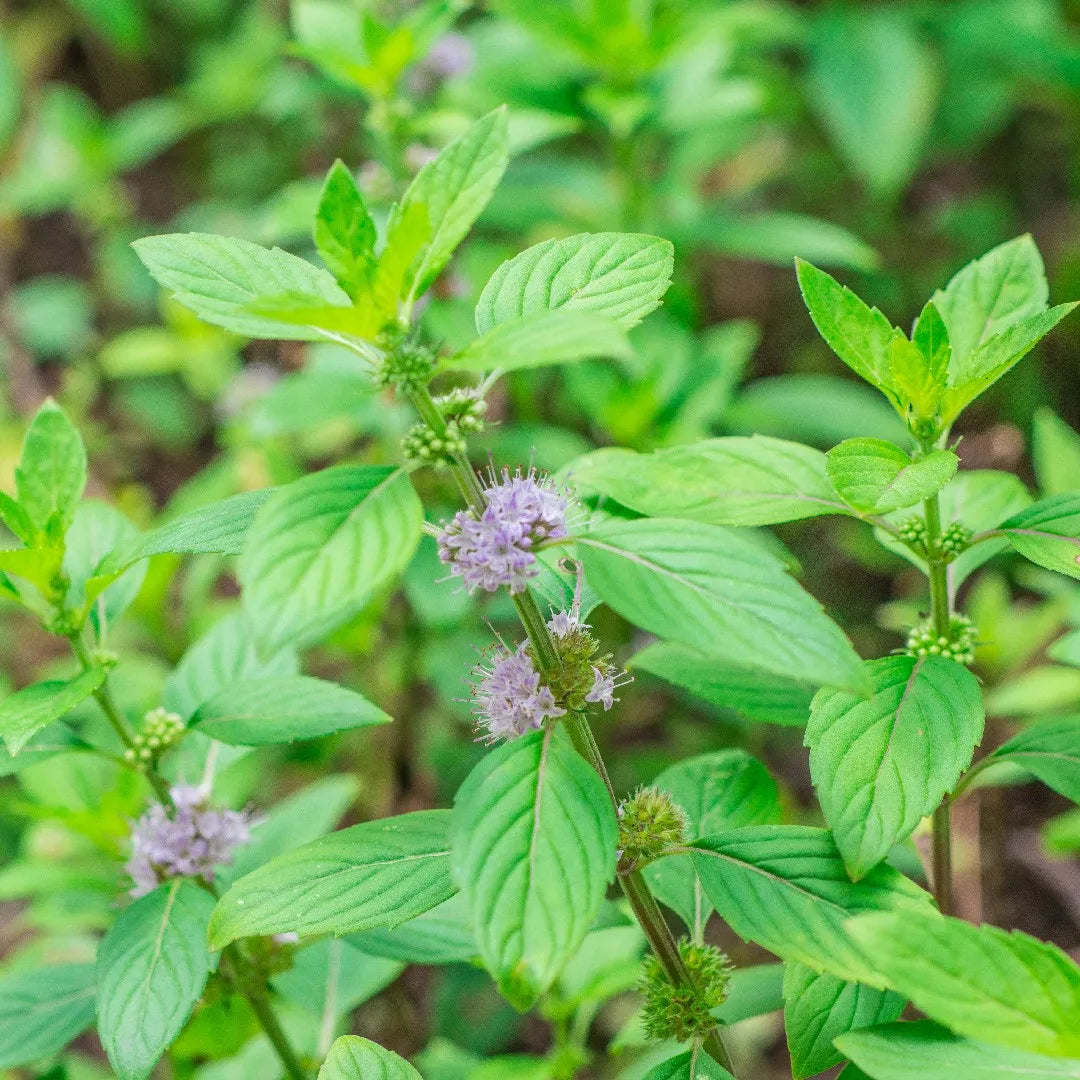
Cornmint (called Japanese peppermint in the piperascens variety) is the world’s volume workhorse. Its crude oil contains very high natural menthol; after crystallization to isolate menthol, the remainder is sold as “dementholized cornmint oil” (DMO). With menthol reduced, DMO leans on menthone / isomenthone, reading drier, greener, and less sweet-useful for technical fragrances, industrial bases, or as an economical cooling accent. If you want a “shock of cold,” intact arvensis oil or added natural menthol delivers a stronger sensory effect than standard peppermint .
/ Mentha Spicata
Spearmint
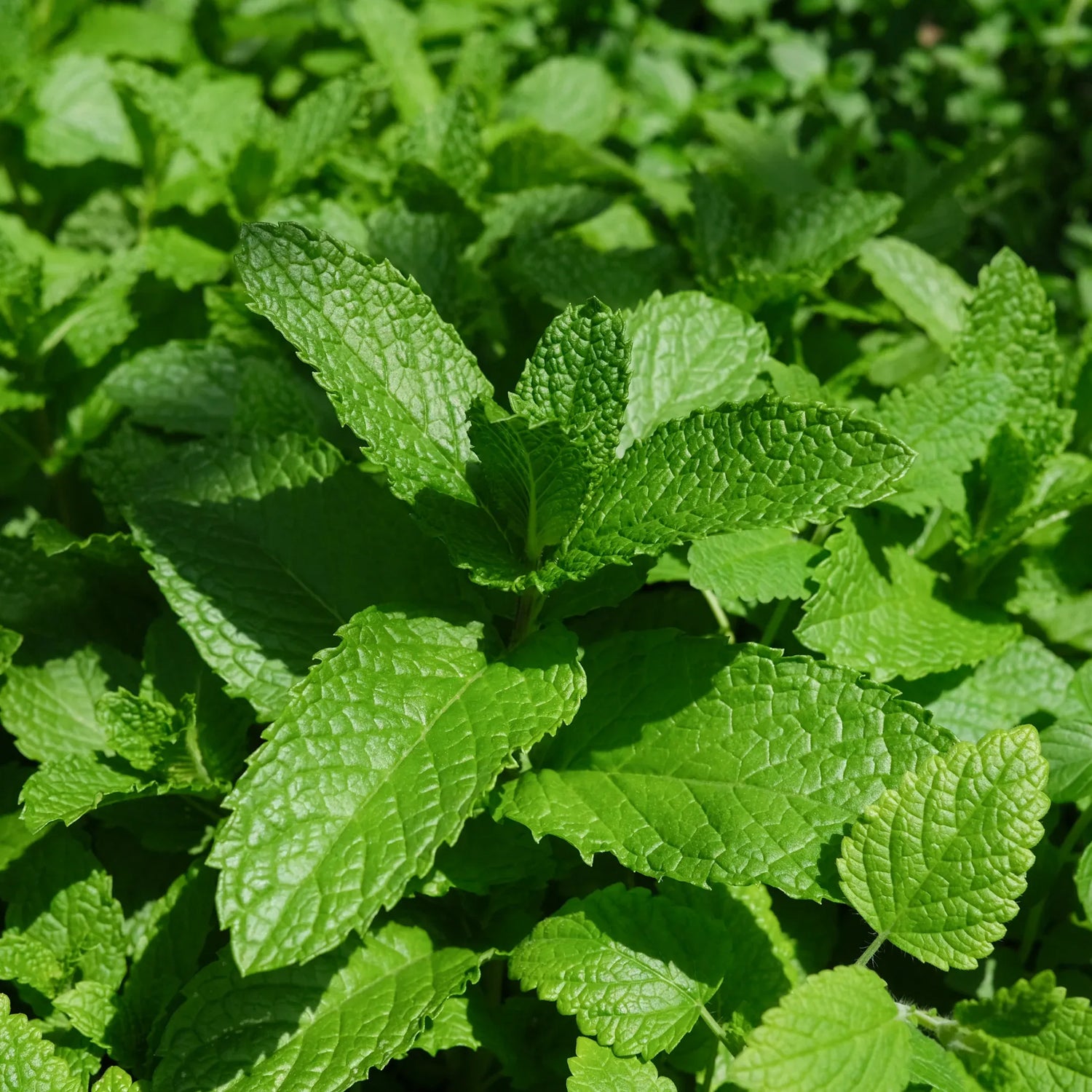
Spearmint lives in a different register: it is less “icy” because it is driven by carvone (especially L-carvone). Carvone gives a green-chewy, spacious mint note that is less sharp and metallic than peppermint. Spearmint feels friendly and gentle-ideal for kids’ oral-care, milder mouthwashes, soft candies, or as a leafy-green facet in floral-green perfumery. Sources from Morocco, the U.S., or Central Europe vary in the carvone / limonene ratio and accompanying herbal shades.
/ Mentha Piperita
Peppermint
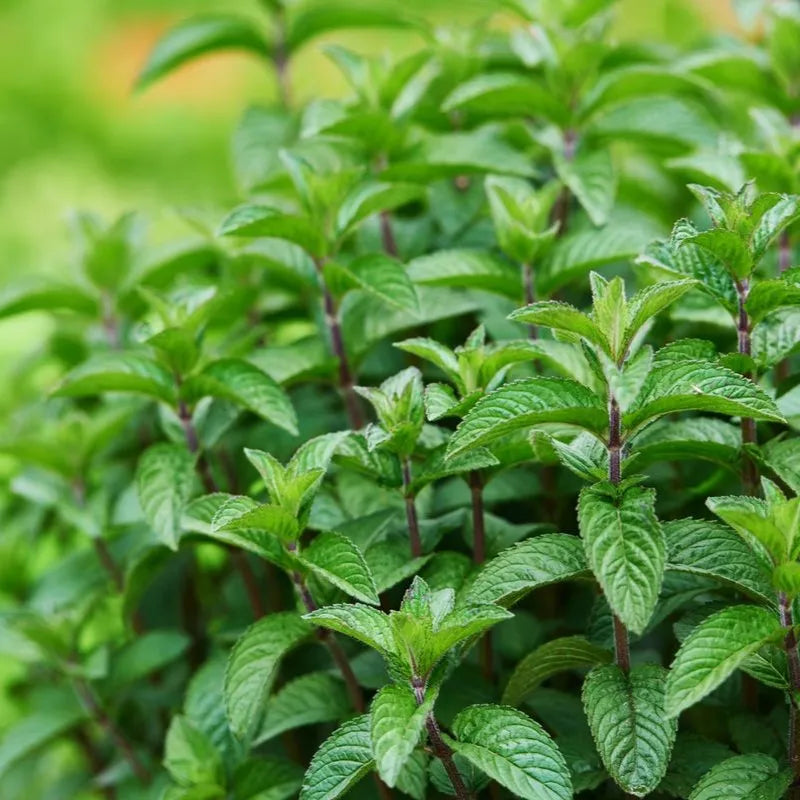
Peppermint is the archetype most people imagine. A natural hybrid of water mint and spearmint, it balances coolness, sweetness, and herbality. Chemically it is rich in menthol and menthone, with isomenthone, menthyl acetate, and a touch of 1,8-cineole. This combination gives a clear, crystalline cool with a slightly bitter, herbal undertone. Traditional sources such as Mitcham in Europe or the Yakima and Willamette valleys in the U.S. often yield refined, rounded profiles, while other terroirs can skew greener or licorice-like depending on variety and soil. Peppermint is a staple in oral care and confectionery and a polishing top note in many fougère, citrus-aromatic, and even fresh gourmand perfumes.
/ Mentha Citrata
Bergamot Mint
Bergamot mint or lavender mint is the family’s outlier. Its chemistry tilts toward linalool and linalyl acetate-closer to bergamot or lavender than to menthol. The scent is soft, floral, and lightly citrusy, with only a mild coolness. It’s a useful way to introduce “gentle mint” into modern colognes, aromatic-citrus accords, or relaxation products where cleanliness and comfort matter more than an icy hit.
Other mint essential oils
Apple mint (Mentha suaveolens) and its curled / round-leaf forms offer a mellow, faintly sweet profile recalling green apple and garden leaves. You’ll often find oxides such as piperitenone oxide alongside menthone / isomenthone. Less common in mass-market work, suaveolens shines in hand-crafted or “garden-wet” concepts, when a soft, low-chill green is desired. Depending on origin, it can hint at hay or even a creamy undertone from supporting esters and terpenes.
Pennyroyal (Mentha pulegium) demands caution. Its oil can be high in pulegone, a molecule with toxicity risks if misused, so applications are narrow and tightly regulated. The scent is herbal and somewhat medicinal, and it is rarely suitable for foods or modern personal care. Though it appears in folk remedies and insect-repellent lore, contemporary use requires close adherence to standards and limits.
Water mint (Mentha aquatica) and horse mint (Mentha longifolia) expand the palette toward “marshy mint,” often with piperitone / piperitone oxide creating a wilder, rough-hewn profile. They’re uncommon in mainstream products but valuable for artistic briefs evoking damp landscapes, riverbanks, and mossy stone.
Processing & Uses
Processing adds another layer of diversity. Steam distillation is standard; rectification (fractional redistillation) refines cut points and removes off-notes; menthol can be crystallized out by solvent / cold methods; supercritical CO₂ extraction preserves a fresher, greener profile with more heavy, less-volatile molecules that steam distillation can lose. Because mint oils vary widely, quality is judged across parameters: GC–MS (menthol / menthone / carvone ratios, etc.), optical rotation, density, refractive index, oxidation stability, and levels of pulegone / menthofuran per safety guidance. Harvest timing, stem-leaf ratio, drying, and storage (light, heat, oxygen) all directly affect odor and stability.
In use, the choice of mint tracks tightly to sensory intent and regulation. Oral-care typically favors clean, smooth peppermint or gentle spearmint; “icy” therapeutics or sports topicals consider sources with controlled menthofuran/pulegone; food flavors choose spearmint for candy-like warmth or dose natural menthol to dial coldness; fine fragrance picks for character: peppermint for a bright, metallic-mint lift, spearmint for chewy green body, citrata to soften floral-citrus spaces. Across categories, follow IFRA or relevant limits and verify batch-specific COA and safety statements.
If “mint” is a color family, each Mentha species is a distinct shade-from ice-cold and candy-sweet to damp-herbal or floral-citrus soft. Grasp the signature chemistry, terroir, and processing and you can paint with precision: choose peppermint for a sharp cooling spear, cornmint / menthol for maximal cold on a budget, spearmint for gentle green chew, citrata for coolness wrapped in flowers and citrus, and longifolia / aquatica for rugged nature studies. The craft is the meeting point of sensory impact, safety, and purpose-where mint stops being “just mint” and becomes a versatile language of scent.


