

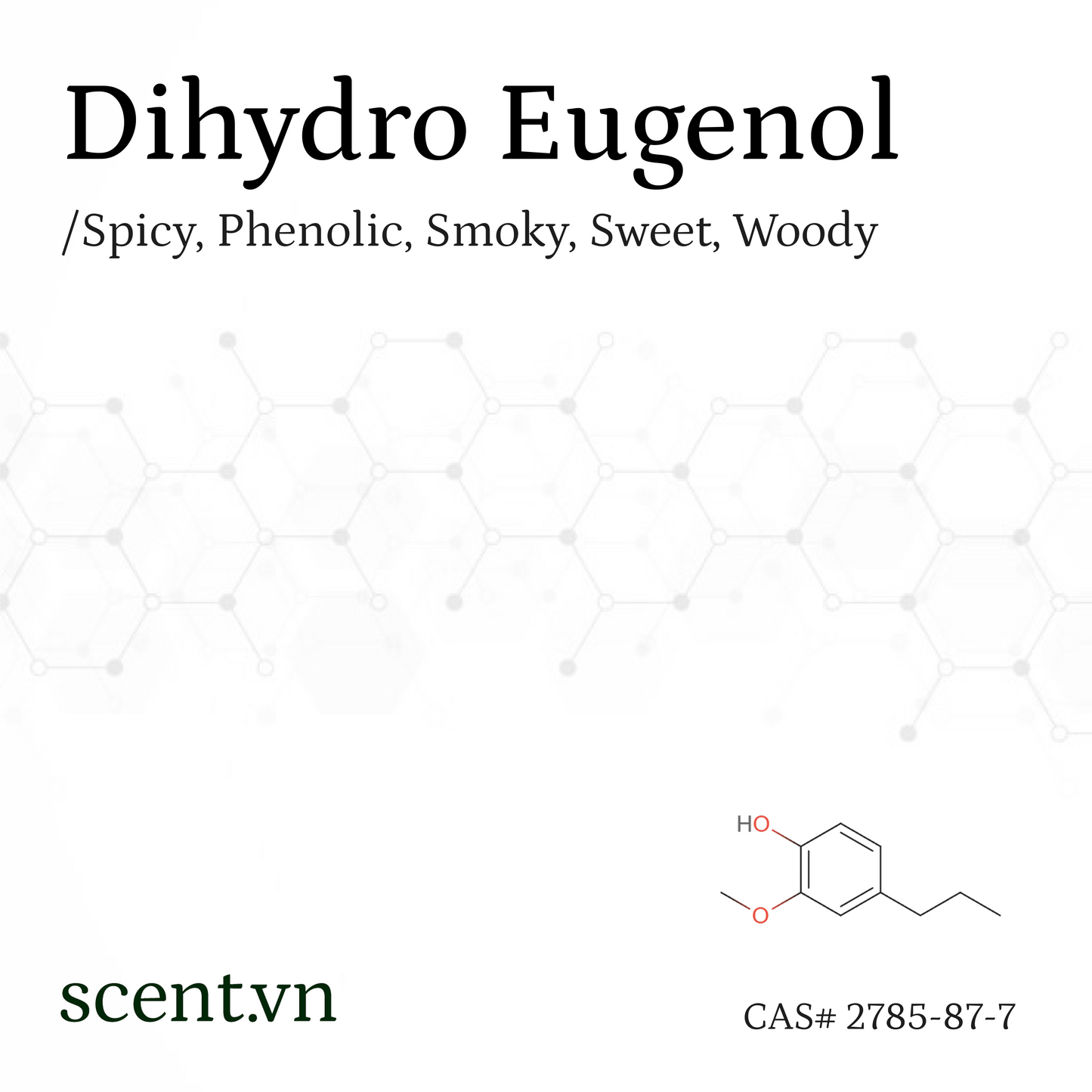
Dihydro Eugenol Aroma Chemical
CAS# 2785-87-7
Spicy, Phenolic, Smoky, Sweet, Woody
Couldn't load pickup availability
Sometimes inspiration from nature needs a touch of science to become perfect. That is the story of Dihydroeugenol-a compound that carries the warm legacy of clove, refined to be more elegant and versatile.
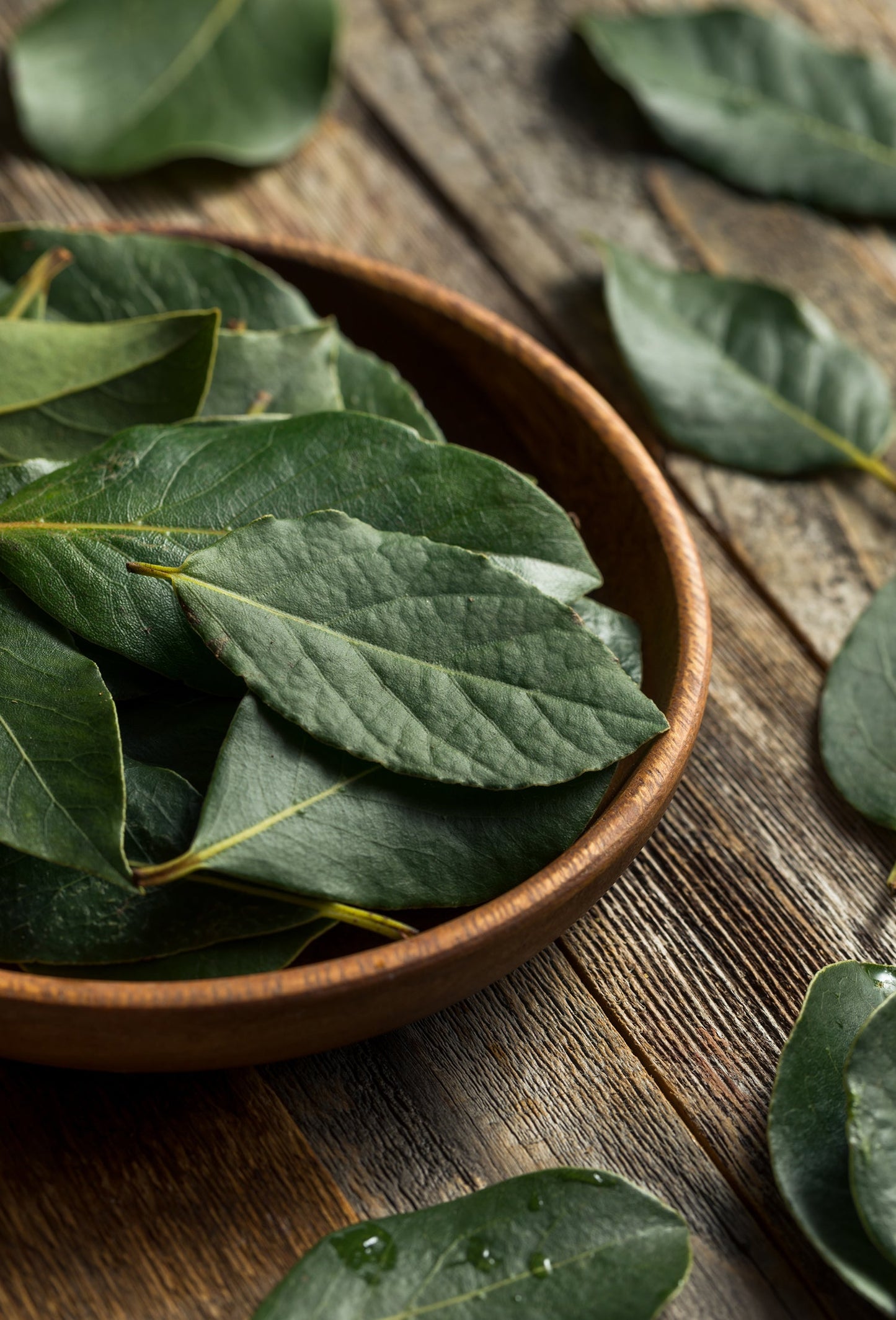
The story of Dihydroeugenol begins in nature. It is produced through the hydrogenation of Eugenol, a naturally occurring compound found in abundance in clove essential oil. While Eugenol has a powerful, characteristic clove scent, it also has drawbacks such as a tendency to discolor and instability in certain product environments, especially alkaline media. Dihydroeugenol was created to solve these issues. Hydrogenation subtly transforms the molecular structure, preserving much of Eugenol’s desired olfactive “soul” while delivering superior chemical stability and a smoother, softer scent.
In appearance, this compound is a slightly viscous liquid, clear and colorless to very pale yellow. Its aroma is a warm whisper of sweet spice-reminiscent of clove, but polished into something gentler and more refined.
Thanks to these advantages, Dihydroeugenol has become an important ingredient in building classic floral accords such as carnation and wallflower, as well as in deep Oriental compositions. In particular, its high stability makes it an ideal choice for fragrances in soaps and detergents-applications where its sibling Eugenol often struggles.
Description
Dihydroeugenol breathes a warm, spicy soul into the heart of a fragrance. It sits firmly in the mid-notes and can gracefully extend its influence down into the base. Classified within the Spice family with floral and woody facets, it functions as an important modifier, especially in floral accords.
Its scent is a symphony of warmth, sweetness, and spice. Steffen Arctander captured its essence perfectly when he described it as “sweet, slightly spicy, reminiscent of Eugenol but softer, sweeter, and somewhat more balsamic,” having removed the harsh, dry aspects of its predecessor. It has medium intensity with good diffusion, and is particularly notable for its long-lasting tenacity-able to persist for over 100 hours on a scent strip.
It is indispensable for bringing a natural, full-bodied carnation accord to life. It adds warmth and depth to other florals such as rose and ylang-ylang. In Oriental fragrances, it amplifies the spicy dimension, making the scent richer and warmer. Technically, Dihydroeugenol is a liquid and dissolves readily in alcohol as well as common solvents, so it can be used directly in formulations.
Applications
Dihydroeugenol’s versatility allows it to appear in many products, from fine fragrance to personal care items such as lotions and shower gels. However, its true value is especially evident in its outstanding stability in alkaline environments, making it a preferred choice for bar soaps and cleaning products such as laundry powders and liquid detergents. Its scent also carries well in scented candles and home fragrance products.
That said, its use must be carefully controlled. Due to its potential to cause skin sensitization, the International Fragrance Association (IFRA) has restricted its use, with a maximum permitted level in products such as perfume of 0.6% under the 49th Amendment. For the same reason, under European Union regulations, manufacturers may need to list its name on the ingredient label if the concentration exceeds the applicable threshold. To ensure safety and quality, it should be stored in a cool place away from light to minimize oxidation.
As a classic ingredient, Dihydroeugenol has left its mark on many iconic fragrances, especially creations featuring prominent carnation notes. Notable examples include L’Air du Temps by Nina Ricci and Bellodgia by Caron.
4.93 / 5
(117) 117 total reviews
Share
Technical standards
Technical standards
| Physical appearance | Liquid | Conform |
| Color | Colorless | Conform |
| Specific Gravity @20˚C | 1.034 → 1.038 | 1.036 |
| Refractive Index @20˚C | 1.521 → 1.525 | 1.522 |
| Purity | ≥ 98.0% | 99.8% |
Solubility @25˚C
Solubility @25˚C
| Solvent | Solubility (g/L) |
|---|---|
| ethanol | 3969.02 |
| methanol | 5212.02 |
| isopropanol | 2401.49 |
| water | 0.77 |
| ethyl acetate | 3433.5 |
| n-propanol | 3137.42 |
| acetone | 4915.6 |
| n-butanol | 2016.52 |
| acetonitrile | 4244.35 |
| DMF | 3709.41 |
| toluene | 478.6 |
| isobutanol | 1658.87 |
| 1,4-dioxane | 3512.51 |
| methyl acetate | 3221.66 |
| THF | 3259.64 |
| 2-butanone | 2700.17 |
| n-pentanol | 946.0 |
| sec-butanol | 1624.64 |
| n-hexane | 68.23 |
| ethylene glycol | 751.2 |
| NMP | 1410.97 |
| cyclohexane | 172.47 |
| DMSO | 4593.13 |
| n-butyl acetate | 1574.58 |
| n-octanol | 289.29 |
| chloroform | 3461.04 |
| n-propyl acetate | 1405.69 |
| acetic acid | 2726.53 |
| dichloromethane | 4451.54 |
| cyclohexanone | 2609.44 |
| propylene glycol | 733.02 |
| isopropyl acetate | 1188.67 |
| DMAc | 1158.18 |
| 2-ethoxyethanol | 1680.95 |
| isopentanol | 1230.69 |
| n-heptane | 44.47 |
| ethyl formate | 2070.47 |
| 1,2-dichloroethane | 3723.33 |
| n-hexanol | 1070.06 |
| 2-methoxyethanol | 3753.03 |
| isobutyl acetate | 598.12 |
| tetrachloromethane | 488.8 |
| n-pentyl acetate | 502.59 |
| transcutol | 3027.91 |
| n-heptanol | 296.63 |
| ethylbenzene | 232.35 |
| MIBK | 806.91 |
| 2-propoxyethanol | 1722.44 |
| tert-butanol | 2626.4 |
| MTBE | 2076.84 |
| 2-butoxyethanol | 604.55 |
| propionic acid | 1968.87 |
| o-xylene | 256.73 |
| formic acid | 833.62 |
| diethyl ether | 2752.64 |
| m-xylene | 310.5 |
| p-xylene | 262.08 |
| chlorobenzene | 1020.62 |
| dimethyl carbonate | 761.33 |
| n-octane | 22.97 |
| formamide | 2008.69 |
| cyclopentanone | 2980.53 |
| 2-pentanone | 2086.91 |
| anisole | 654.77 |
| cyclopentyl methyl ether | 1321.26 |
| gamma-butyrolactone | 3526.78 |
| 1-methoxy-2-propanol | 1895.8 |
| pyridine | 2037.43 |
| 3-pentanone | 1255.37 |
| furfural | 1986.55 |
| n-dodecane | 20.1 |
| diethylene glycol | 1263.2 |
| diisopropyl ether | 381.24 |
| tert-amyl alcohol | 1641.36 |
| acetylacetone | 1730.05 |
| n-hexadecane | 24.08 |
| acetophenone | 523.71 |
| methyl propionate | 2185.31 |
| isopentyl acetate | 982.7 |
| trichloroethylene | 4910.99 |
| n-nonanol | 235.86 |
| cyclohexanol | 1187.17 |
| benzyl alcohol | 561.45 |
| 2-ethylhexanol | 426.26 |
| isooctanol | 235.92 |
| dipropyl ether | 537.41 |
| 1,2-dichlorobenzene | 747.23 |
| ethyl lactate | 370.45 |
| propylene carbonate | 1529.99 |
| n-methylformamide | 3006.05 |
| 2-pentanol | 1032.68 |
| n-pentane | 81.87 |
| 1-propoxy-2-propanol | 957.25 |
| 1-methoxy-2-propyl acetate | 887.14 |
| 2-(2-methoxypropoxy) propanol | 410.94 |
| mesitylene | 190.03 |
| ε-caprolactone | 1865.16 |
| p-cymene | 140.79 |
| epichlorohydrin | 4010.21 |
| 1,1,1-trichloroethane | 2339.73 |
| 2-aminoethanol | 1385.74 |
| morpholine-4-carbaldehyde | 1668.55 |
| sulfolane | 2874.21 |
| 2,2,4-trimethylpentane | 53.71 |
| 2-methyltetrahydrofuran | 2322.29 |
| n-hexyl acetate | 641.07 |
| isooctane | 47.02 |
| 2-(2-butoxyethoxy)ethanol | 695.51 |
| sec-butyl acetate | 613.73 |
| tert-butyl acetate | 1010.35 |
| decalin | 66.2 |
| glycerin | 817.84 |
| diglyme | 1424.97 |
| acrylic acid | 1444.55 |
| isopropyl myristate | 194.39 |
| n-butyric acid | 2614.68 |
| acetyl acetate | 1234.92 |
| di(2-ethylhexyl) phthalate | 168.27 |
| ethyl propionate | 958.92 |
| nitromethane | 5191.4 |
| 1,2-diethoxyethane | 1123.57 |
| benzonitrile | 831.65 |
| trioctyl phosphate | 147.61 |
| 1-bromopropane | 1610.99 |
| gamma-valerolactone | 2941.37 |
| n-decanol | 173.32 |
| triethyl phosphate | 209.15 |
| 4-methyl-2-pentanol | 396.66 |
| propionitrile | 2590.17 |
| vinylene carbonate | 1394.58 |
| 1,1,2-trichlorotrifluoroethane | 1838.56 |
| DMS | 565.81 |
| cumene | 143.27 |
| 2-octanol | 204.31 |
| 2-hexanone | 992.69 |
| octyl acetate | 266.14 |
| limonene | 228.6 |
| 1,2-dimethoxyethane | 2515.97 |
| ethyl orthosilicate | 206.68 |
| tributyl phosphate | 194.98 |
| diacetone alcohol | 1009.66 |
| N,N-dimethylaniline | 282.48 |
| acrylonitrile | 2996.46 |
| aniline | 870.61 |
| 1,3-propanediol | 1904.33 |
| bromobenzene | 999.86 |
| dibromomethane | 2695.28 |
| 1,1,2,2-tetrachloroethane | 3249.97 |
| 2-methyl-cyclohexyl acetate | 350.11 |
| tetrabutyl urea | 222.12 |
| diisobutyl methanol | 220.14 |
| 2-phenylethanol | 513.71 |
| styrene | 360.94 |
| dioctyl adipate | 272.23 |
| dimethyl sulfate | 878.41 |
| ethyl butyrate | 725.99 |
| methyl lactate | 616.48 |
| butyl lactate | 361.16 |
| diethyl carbonate | 443.19 |
| propanediol butyl ether | 555.8 |
| triethyl orthoformate | 356.57 |
| p-tert-butyltoluene | 139.48 |
| methyl 4-tert-butylbenzoate | 333.07 |
| morpholine | 4126.4 |
| tert-butylamine | 1261.36 |
| n-dodecanol | 127.68 |
| dimethoxymethane | 2388.69 |
| ethylene carbonate | 1343.55 |
| cyrene | 389.71 |
| 2-ethoxyethyl acetate | 745.24 |
| 2-ethylhexyl acetate | 664.47 |
| 1,2,4-trichlorobenzene | 802.78 |
| 4-methylpyridine | 1614.29 |
| dibutyl ether | 402.19 |
| 2,6-dimethyl-4-heptanol | 220.14 |
| DEF | 1852.84 |
| dimethyl isosorbide | 674.51 |
| tetrachloroethylene | 2077.49 |
| eugenol | 368.75 |
| triacetin | 468.38 |
| span 80 | 359.89 |
| 1,4-butanediol | 581.24 |
| 1,1-dichloroethane | 3249.15 |
| 2-methyl-1-pentanol | 670.46 |
| methyl formate | 2503.98 |
| 2-methyl-1-butanol | 1197.8 |
| n-decane | 33.41 |
| butyronitrile | 2170.68 |
| 3,7-dimethyl-1-octanol | 265.96 |
| 1-chlorooctane | 194.14 |
| 1-chlorotetradecane | 70.84 |
| n-nonane | 32.92 |
| undecane | 25.35 |
| tert-butylcyclohexane | 61.09 |
| cyclooctane | 44.86 |
| cyclopentanol | 1204.33 |
| tetrahydropyran | 3222.28 |
| tert-amyl methyl ether | 947.45 |
| 2,5,8-trioxanonane | 766.77 |
| 1-hexene | 369.51 |
| 2-isopropoxyethanol | 897.49 |
| 2,2,2-trifluoroethanol | 682.94 |
| methyl butyrate | 1450.08 |
Scent© AI
Olfactory Pyramid

Notes
| Spicy |
| Phenolic |
| Smoky |
| Sweet |
| Woody |
| Maximum acceptable concentrations in the finished product (%) | |||
|---|---|---|---|
|
Category 1
Products applied to the lips
|
0.13 % |
Category 7A
Rinse-off products applied to the hair with some hand contact
|
1.5 % |
|
Category 2
Products applied to the axillae
|
0.039 % |
Category 7B
Leave-on products applied to the hair with some hand contact
|
1.5 % |
|
Category 3
Products applied to the face/body using fingertips
|
0.78 % |
Category 8
Products with significant anogenital exposure
|
0.062 % |
|
Category 4
Products related to fine fragrance
|
0.73 % |
Category 9
Products with body and hand exposure, primarily rinse off
|
1.4 % |
|
Category 5A
Body lotion products applied to the body using the hands (palms), primarily leave on
|
0.19 % |
Category 10A
Household care products with mostly hand contact
|
1.4 % |
|
Category 5B
Face moisturizer products applied to the face using the hands (palms), primarily leave on
|
0.19 % |
Category 10B
Household care products with mostly hand contact, including aerosol/spray products (with potential leave-on skin contact)
|
5.1 % |
|
Category 5C
Hand cream products applied to the hands using the hands (palms), primarily leave on
|
0.19 % |
Category 11A
Products with intended skin contact but minimal transfer of fragrance to skin from inert substrate without UV exposure
|
0.062 % |
|
Category 5D
Baby Creams, baby Oils and baby talc
|
0.062 % |
Category 11B
Products with intended skin contact but minimal transfer of fragrance to skin from inert substrate with potential UV exposure
|
0.062 % |
|
Category 6
Products with oral and lip exposure
|
0.43 % |
Category 12
Products not intended for direct skin contact, minimal or insignificant transfer to skin
|
No restriction |
Shipping & Returns
-
 All orders will be processed within 1-2 business days from the time the order is confirmed.
 -
 Free shipping is available for international retail orders valued at 500 USD or more.
 -
 Delivery time is 1-3 business days for local areas, 3-7 days for suburban and nationwide deliveries, and 1-4 weeks for international orders.
 -
 You have 30 days from the date of receipt to initiate the return process.


Certificates of Quality
-
Certificate of Analysis (COA)
Provides information on the physical and chemical properties of the product.Download -
IFRA Certificate of Conformity
Sets safety standards and guidelines for the product in manufacturing.Download -
Safety Data Sheet (SDS)
Provides important safety guidelines for transporting, storing, and using the product.Download


