

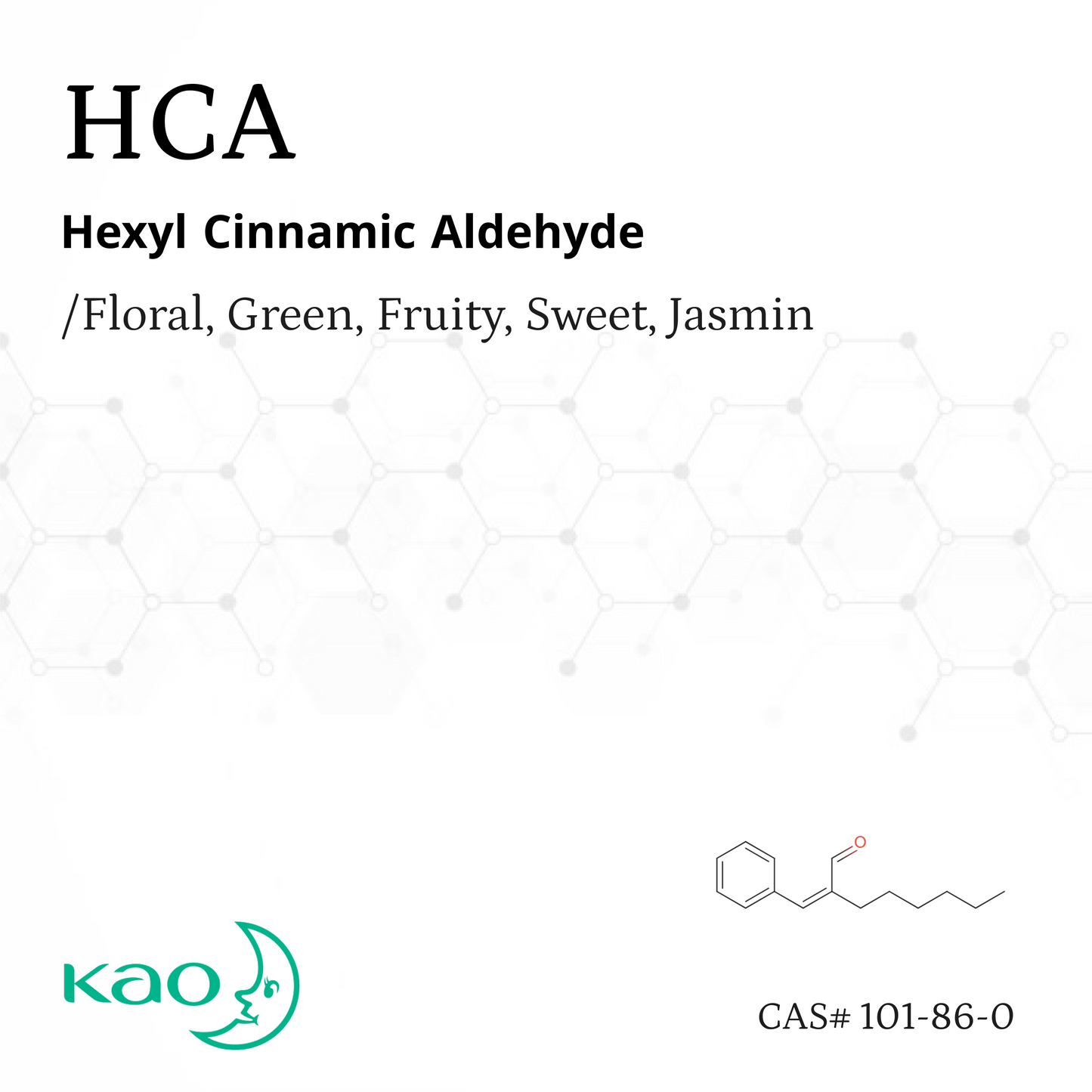
Hexyl Cinnamic Aldehyde HCA aka. Hexyl Cinnamaldehyde Aroma Chemical
CAS# 101-86-0
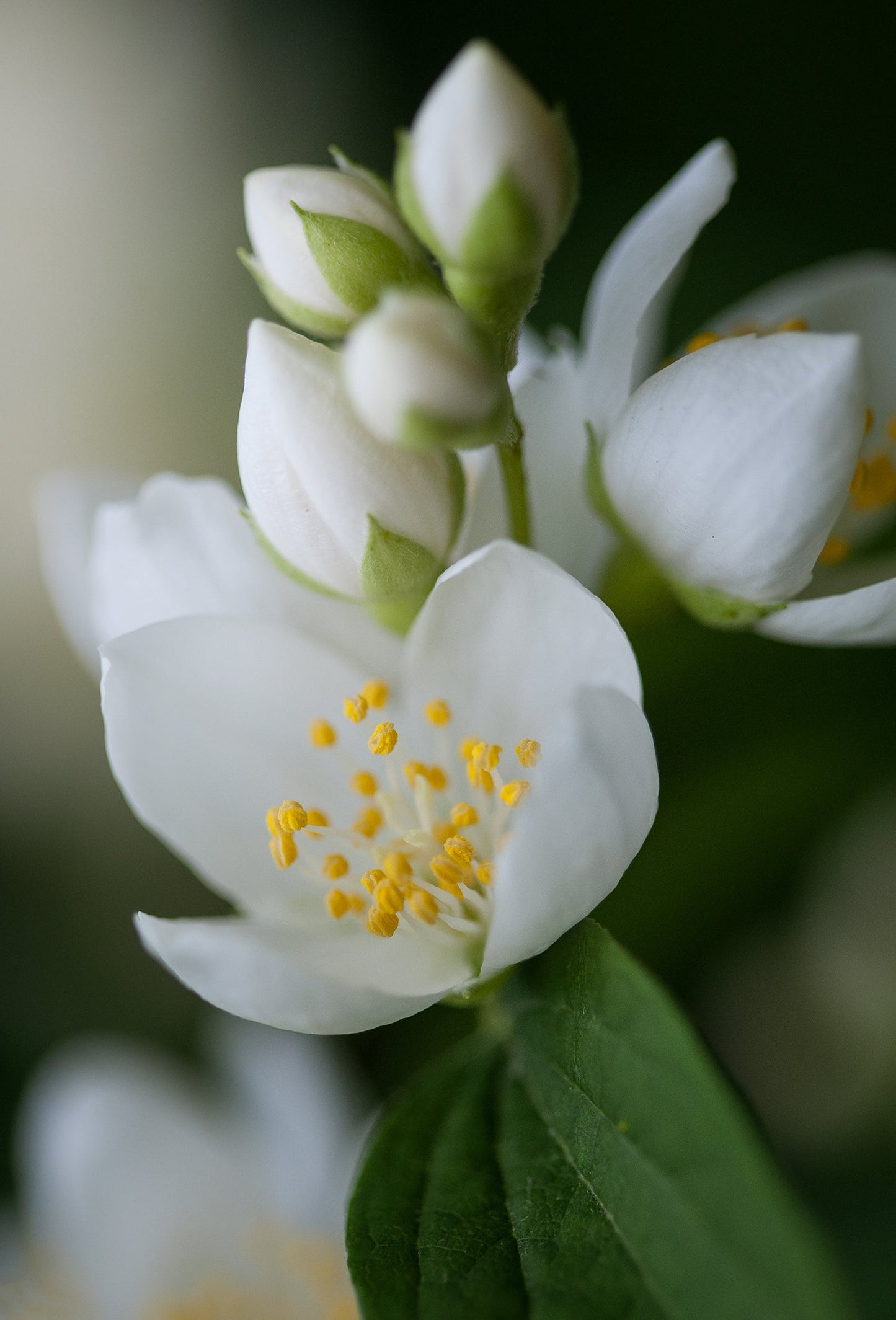
Floral, Green, Fruity, Sweet, Jasmin
Couldn't load pickup availability
Hexyl Cinnamic Aldehyde-often abbreviated as HCA and also known by chemical names such as alpha-hexylcinnamaldehyde and 2-(phenylmethylene)octanal-is a fully synthetic fragrance ingredient. Although its structure mimics naturally occurring compounds, this material is manufactured industrially via an aldol condensation between the fatty aldehyde octanal and benzaldehyde. Presenting as a clear, oil-based liquid ranging in color from pale yellow to a more pronounced yellow, HCA carries a jasmine-like scent with faint nuances of fatty/oily, waxy, and lightly herbaceous notes. Its history began when chemists sought an improved version of Amyl Cinnamic Aldehyde (ACA), which was discovered in 1923. The result was HCA, offering a lighter, more airy jasmine character with less greasy nuance than ACA, and exceptional stability in harsh media such as high-pH soaps and detergents, making it one of the most widely used fragrance materials worldwide today.
Description
Belonging to the floral family with a jasmine signature and a green-herbal facet, HCA operates from the heart to base of a composition. It functions as a blending material and a fixative thanks to its low vapor pressure, and it is also a highly useful odor modifier in formulas. Rather than projecting the sparkle of fresh flowers, HCA leans toward a waxy, oily, green-herbal direction, giving a soft, subdued impression with medium to low intensity. In exchange, its substantivity is excellent-it lasts a long time on blotters and is exceptionally durable on fabrics. In compounding, it is considered a backbone for building jasmine and gardenia accords: it adds body, creates a foundation, and links other floral materials together, while partially replacing expensive natural jasmine oil. A classic approach is combining HCA with benzyl acetate and indole: benzyl acetate provides diffusion, indole contributes the characteristic animalic nuance, and HCA builds the “body” and long-lasting structure of the artificial flower. Because it is a user-friendly liquid, HCA is often used neat, but it should always be supplied/used with an antioxidant.
Applications
Its largest use is in detergents and fabric care (laundry powders, fabric softeners) due to its low cost and outstanding lasting power. It is also widely used in cosmetics, including bar soaps, shower gels, shampoos, and most floral perfumes. HCA has a flexible dosage range-typically 2% to 30% within fragrance compounds and it can be very high in fabric softeners-however, the concentration in the finished consumer product is always subject to IFRA limits. From a safety standpoint, it appears in the EU’s list of 26 fragrance allergens requiring labeling (and similarly in many other markets). Because it oxidizes readily on exposure to air-forming byproducts that can irritate skin-commercial HCA is commonly stabilized with antioxidants such as BHT or tocopherol (vitamin E). Users should store it in a tightly sealed, dark container, away from light and high temperatures. In the market, it is difficult to single out one specific perfume because HCA appears in thousands of classic and modern products, but its heavy use is easy to recognize in floral fabric softeners such as Downy or Comfort. Finally, in entry 1609 of Perfume and Flavor Chemicals, expert Steffen Arctander described HCA as jasmine-like with a green-herbal tone-light yet persistent-and noted it is often preferred over ACA because it is more distinctly floral and less greasy, emphasizing that it is among the most frequently used perfume chemicals, present in nearly all types of floral fragrances and essential to jasmine and gardenia bases.
4.95 / 5
(115) 115 total reviews
Share
Technical standards
Technical standards
| Lot CBFC51 | MFD 3/1/2026 | BBD 3/1/2028 |
| Physical appearance | Liquid | Conform |
| Color | Pale yellow to yellow | Conform |
| Specific Gravity @20˚C | 0.953 → 0.963 | 0.9583 |
| Refractive Index @20˚C | 1.547 → 1.553 | 1.548 |
| Acid value (mgKOH/g) | ≤ 0.5 | 0.22 |
| Purity | ≥ 97.0% | 98.04% |
Solubility @25˚C
Solubility @25˚C
| Solvent | Solubility (g/L) |
|---|---|
| ethanol | 2328.39 |
| methanol | 2186.76 |
| isopropanol | 1417.23 |
| water | 0.05 |
| ethyl acetate | 5474.98 |
| n-propanol | 1953.04 |
| acetone | 5738.21 |
| n-butanol | 1659.9 |
| acetonitrile | 3378.1 |
| DMF | 5041.6 |
| toluene | 1727.61 |
| isobutanol | 1176.97 |
| 1,4-dioxane | 2972.09 |
| methyl acetate | 3226.85 |
| THF | 3008.39 |
| 2-butanone | 4100.31 |
| n-pentanol | 864.19 |
| sec-butanol | 1112.98 |
| n-hexane | 160.38 |
| ethylene glycol | 166.53 |
| NMP | 2238.93 |
| cyclohexane | 250.78 |
| DMSO | 3900.93 |
| n-butyl acetate | 2203.11 |
| n-octanol | 218.52 |
| chloroform | 5867.68 |
| n-propyl acetate | 2122.16 |
| acetic acid | 1104.99 |
| dichloromethane | 7930.77 |
| cyclohexanone | 3916.53 |
| propylene glycol | 338.34 |
| isopropyl acetate | 2340.74 |
| DMAc | 2784.88 |
| 2-ethoxyethanol | 1194.78 |
| isopentanol | 1257.67 |
| n-heptane | 64.46 |
| ethyl formate | 1551.45 |
| 1,2-dichloroethane | 7179.06 |
| n-hexanol | 907.21 |
| 2-methoxyethanol | 2429.6 |
| isobutyl acetate | 1046.42 |
| tetrachloromethane | 485.8 |
| n-pentyl acetate | 835.8 |
| transcutol | 5877.47 |
| n-heptanol | 260.43 |
| ethylbenzene | 639.71 |
| MIBK | 1534.01 |
| 2-propoxyethanol | 1488.65 |
| tert-butanol | 1265.06 |
| MTBE | 2152.57 |
| 2-butoxyethanol | 643.02 |
| propionic acid | 1187.37 |
| o-xylene | 584.78 |
| formic acid | 216.64 |
| diethyl ether | 3998.01 |
| m-xylene | 762.93 |
| p-xylene | 619.57 |
| chlorobenzene | 2100.28 |
| dimethyl carbonate | 938.5 |
| n-octane | 26.21 |
| formamide | 653.54 |
| cyclopentanone | 3817.3 |
| 2-pentanone | 3723.37 |
| anisole | 1356.44 |
| cyclopentyl methyl ether | 2072.46 |
| gamma-butyrolactone | 3401.7 |
| 1-methoxy-2-propanol | 1794.29 |
| pyridine | 3945.55 |
| 3-pentanone | 2513.97 |
| furfural | 2304.96 |
| n-dodecane | 18.44 |
| diethylene glycol | 738.78 |
| diisopropyl ether | 679.7 |
| tert-amyl alcohol | 935.0 |
| acetylacetone | 3089.12 |
| n-hexadecane | 22.57 |
| acetophenone | 1155.34 |
| methyl propionate | 3367.17 |
| isopentyl acetate | 1634.23 |
| trichloroethylene | 9632.58 |
| n-nonanol | 205.86 |
| cyclohexanol | 1126.61 |
| benzyl alcohol | 837.23 |
| 2-ethylhexanol | 528.59 |
| isooctanol | 239.7 |
| dipropyl ether | 1062.78 |
| 1,2-dichlorobenzene | 1629.24 |
| ethyl lactate | 478.1 |
| propylene carbonate | 1681.74 |
| n-methylformamide | 1977.09 |
| 2-pentanol | 1040.28 |
| n-pentane | 122.96 |
| 1-propoxy-2-propanol | 1162.05 |
| 1-methoxy-2-propyl acetate | 1681.84 |
| 2-(2-methoxypropoxy) propanol | 587.94 |
| mesitylene | 380.89 |
| ε-caprolactone | 2569.97 |
| p-cymene | 229.36 |
| epichlorohydrin | 5274.3 |
| 1,1,1-trichloroethane | 3775.07 |
| 2-aminoethanol | 566.55 |
| morpholine-4-carbaldehyde | 2116.17 |
| sulfolane | 3144.06 |
| 2,2,4-trimethylpentane | 57.92 |
| 2-methyltetrahydrofuran | 2767.07 |
| n-hexyl acetate | 947.53 |
| isooctane | 54.23 |
| 2-(2-butoxyethoxy)ethanol | 946.38 |
| sec-butyl acetate | 1254.9 |
| tert-butyl acetate | 1732.3 |
| decalin | 114.61 |
| glycerin | 340.42 |
| diglyme | 2132.6 |
| acrylic acid | 804.66 |
| isopropyl myristate | 306.2 |
| n-butyric acid | 2285.73 |
| acetyl acetate | 1746.22 |
| di(2-ethylhexyl) phthalate | 225.23 |
| ethyl propionate | 1826.4 |
| nitromethane | 3499.87 |
| 1,2-diethoxyethane | 2408.16 |
| benzonitrile | 1405.67 |
| trioctyl phosphate | 160.71 |
| 1-bromopropane | 3513.8 |
| gamma-valerolactone | 3797.65 |
| n-decanol | 147.23 |
| triethyl phosphate | 338.97 |
| 4-methyl-2-pentanol | 448.71 |
| propionitrile | 2350.81 |
| vinylene carbonate | 1534.0 |
| 1,1,2-trichlorotrifluoroethane | 2059.76 |
| DMS | 978.25 |
| cumene | 306.41 |
| 2-octanol | 171.71 |
| 2-hexanone | 1848.53 |
| octyl acetate | 358.08 |
| limonene | 370.79 |
| 1,2-dimethoxyethane | 2344.18 |
| ethyl orthosilicate | 330.75 |
| tributyl phosphate | 251.55 |
| diacetone alcohol | 1310.48 |
| N,N-dimethylaniline | 588.5 |
| acrylonitrile | 2681.18 |
| aniline | 1558.51 |
| 1,3-propanediol | 885.81 |
| bromobenzene | 2466.72 |
| dibromomethane | 4846.89 |
| 1,1,2,2-tetrachloroethane | 6769.27 |
| 2-methyl-cyclohexyl acetate | 605.43 |
| tetrabutyl urea | 330.32 |
| diisobutyl methanol | 283.49 |
| 2-phenylethanol | 719.02 |
| styrene | 1057.05 |
| dioctyl adipate | 426.84 |
| dimethyl sulfate | 1111.45 |
| ethyl butyrate | 1337.29 |
| methyl lactate | 684.2 |
| butyl lactate | 517.02 |
| diethyl carbonate | 702.64 |
| propanediol butyl ether | 491.07 |
| triethyl orthoformate | 640.7 |
| p-tert-butyltoluene | 211.18 |
| methyl 4-tert-butylbenzoate | 524.4 |
| morpholine | 3947.07 |
| tert-butylamine | 776.06 |
| n-dodecanol | 108.92 |
| dimethoxymethane | 3156.33 |
| ethylene carbonate | 1391.6 |
| cyrene | 452.99 |
| 2-ethoxyethyl acetate | 1318.55 |
| 2-ethylhexyl acetate | 1150.43 |
| 1,2,4-trichlorobenzene | 1803.62 |
| 4-methylpyridine | 3790.55 |
| dibutyl ether | 742.01 |
| 2,6-dimethyl-4-heptanol | 283.49 |
| DEF | 3659.18 |
| dimethyl isosorbide | 1037.4 |
| tetrachloroethylene | 3708.1 |
| eugenol | 518.68 |
| triacetin | 779.09 |
| span 80 | 428.59 |
| 1,4-butanediol | 289.21 |
| 1,1-dichloroethane | 5709.18 |
| 2-methyl-1-pentanol | 759.89 |
| methyl formate | 1233.36 |
| 2-methyl-1-butanol | 1146.66 |
| n-decane | 33.57 |
| butyronitrile | 2397.96 |
| 3,7-dimethyl-1-octanol | 315.59 |
| 1-chlorooctane | 255.61 |
| 1-chlorotetradecane | 81.22 |
| n-nonane | 33.4 |
| undecane | 23.8 |
| tert-butylcyclohexane | 95.1 |
| cyclooctane | 65.03 |
| cyclopentanol | 834.99 |
| tetrahydropyran | 4000.8 |
| tert-amyl methyl ether | 1198.64 |
| 2,5,8-trioxanonane | 1126.94 |
| 1-hexene | 929.53 |
| 2-isopropoxyethanol | 835.41 |
| 2,2,2-trifluoroethanol | 294.74 |
| methyl butyrate | 2433.77 |
Scent© AI
Olfactory Pyramid

Notes
| Floral |
| Green |
| Fruity |
| Sweet |
| Jasmin |
| Maximum acceptable concentrations in the finished product (%) | |||
|---|---|---|---|
|
Category 1
Products applied to the lips
|
1.8 % |
Category 7A
Rinse-off products applied to the hair with some hand contact
|
20 % |
|
Category 2
Products applied to the axillae
|
0.53 % |
Category 7B
Leave-on products applied to the hair with some hand contact
|
20 % |
|
Category 3
Products applied to the face/body using fingertips
|
11 % |
Category 8
Products with significant anogenital exposure
|
1 % |
|
Category 4
Products related to fine fragrance
|
9.9 % |
Category 9
Products with body and hand exposure, primarily rinse off
|
19 % |
|
Category 5A
Body lotion products applied to the body using the hands (palms), primarily leave on
|
2.5 % |
Category 10A
Household care products with mostly hand contact
|
69 % |
|
Category 5B
Face moisturizer products applied to the face using the hands (palms), primarily leave on
|
2.5 % |
Category 10B
Household care products with mostly hand contact, including aerosol/spray products (with potential leave-on skin contact)
|
69 % |
|
Category 5C
Hand cream products applied to the hands using the hands (palms), primarily leave on
|
2.5 % |
Category 11A
Products with intended skin contact but minimal transfer of fragrance to skin from inert substrate without UV exposure
|
38 % |
|
Category 5D
Baby Creams, baby Oils and baby talc
|
2.5 % |
Category 11B
Products with intended skin contact but minimal transfer of fragrance to skin from inert substrate with potential UV exposure
|
38 % |
|
Category 6
Products with oral and lip exposure
|
5.8 % |
Category 12
Products not intended for direct skin contact, minimal or insignificant transfer to skin
|
No restriction |
Shipping & Returns
-
 All orders will be processed within 1-3 business days from the time the order is confirmed.
 -
 Free shipping is available for international retail orders valued at 500 USD or more.
 -
 Delivery time is 1-3 business days for local areas, 3-7 days for suburban and nationwide deliveries, and 1-4 weeks for international orders.
 -
 You have 15 days from the date you receive the product to initiate a return, provided the product remains unopened and the seal is intact.


Certificates of Quality
-
Certificate of Analysis (COA)
Provides information on the physical and chemical properties of the product.Download -
IFRA Certificate of Conformity
Sets safety standards and guidelines for the product in manufacturing.Download -
Safety Data Sheet (SDS)
Provides important safety guidelines for transporting, storing, and using the product.Download


