

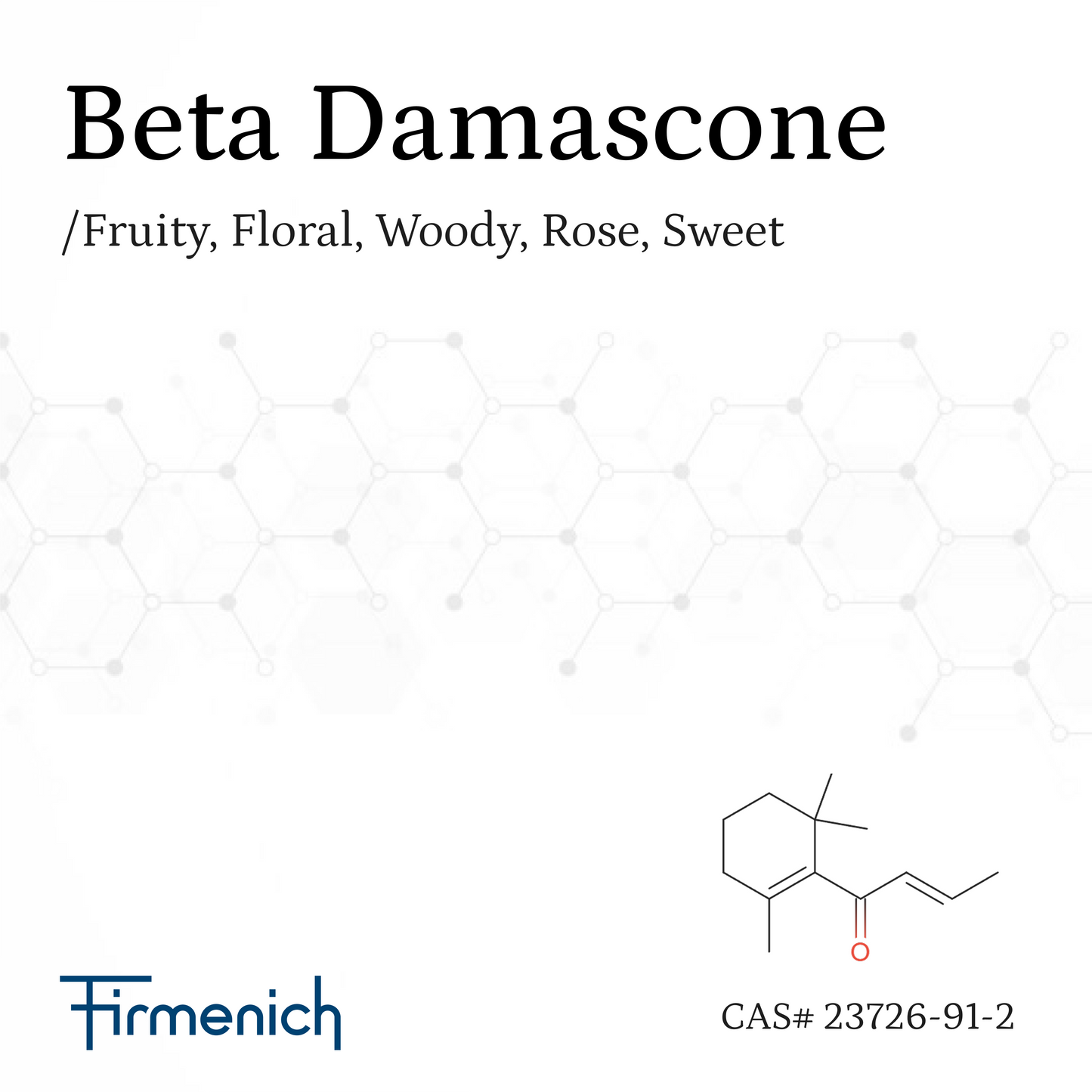
Beta Damascone Aroma Chemical
CAS# 23726-91-2 / 35044-68-9
Fruity, Floral, Woody, Rose, Sweet
Couldn't load pickup availability
Beta Damascone is an aroma molecule belonging to the rose ketone family. It is widely regarded as one of the most influential and powerful materials in a perfumer’s palette. Developed and produced by Firmenich, this compound is renowned for its ability to add richness, depth, and exceptional diffusion to fragrance creations, especially in floral and fruity accords.
In terms of origin, Beta Damascone occurs naturally at extremely low levels in Damask rose essential oil (around 0.05%), tobacco, and certain teas. However, because its natural concentration is far too low for commercial extraction, Beta Damascone today is predominantly produced via synthetic methods.
In the early 1960s, Firmenich collaborated with chemists to conduct an in-depth analysis of Bulgarian rose oil-work that led to the discovery and successful synthesis of rose ketones, including Beta Damascone. The damascone compounds were subsequently isolated for the first time during the 1970–1980 period, and this discovery represented a genuine breakthrough, opening new creative directions for perfumers thanks to their distinctive olfactory profile and extremely high odor intensity.
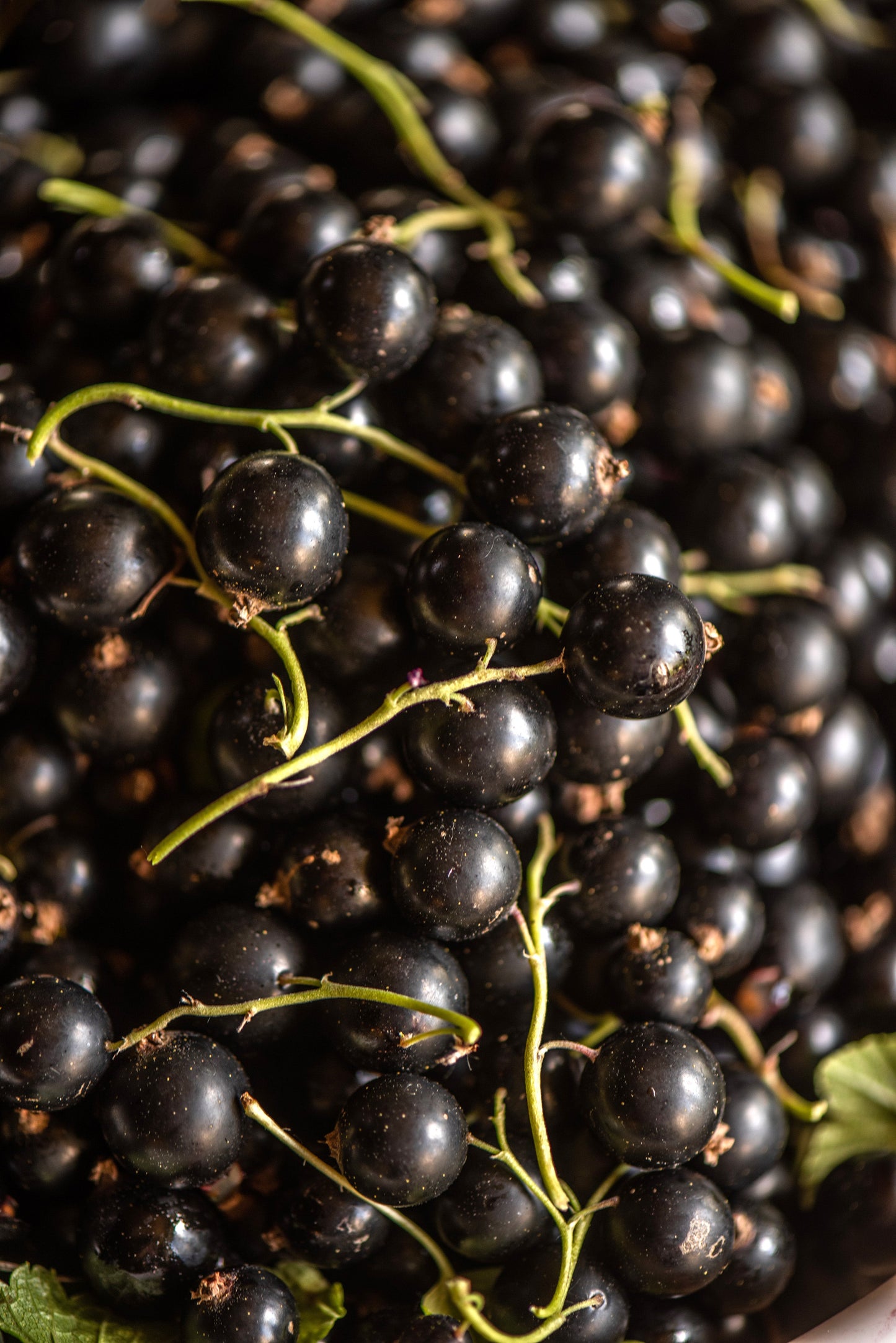
In appearance, Beta Damascone is a liquid ranging from colorless and transparent to pale yellow, with an intense fruity-floral scent reminiscent of rose, plum, and blackcurrant. Beta Damascone (sometimes written as β-Damascone) is both its chemical name and its most common name, while Firmenich supplies this material under the trade name DAMASCONE BETA FAB. Beta Damascone is widely used not only in fine perfumery but also in cosmetics such as creams and shower gels, and even in the flavor industry to create characteristic fruity and floral notes.
Description
Beta Damascone is a fragrance compound that falls within the Floral and Fruity families. In a fragrance formula, it functions as a highly effective modifier and booster, and is often placed in the heart and base due to its impressive substantivity.
The scent of Beta Damascone is described as very powerful and complex. It delivers a signature rose character, subtly intertwined with dark-fruit facets such as ripe plum and blackcurrant, along with honeyed sweetness and a touch of warm tobacco nuance. Compared to Alpha Damascone, the Beta form is sweeter and less herbal. Its odor impact is extremely high, with strong diffusion that lends radiance and vividness to the overall composition. Notably, Beta Damascone has outstanding longevity and can last more than 180 hours on a blotter strip.
In terms of use, Beta Damascone is a key building block for modern rose accords, helping them feel natural and lifelike. It is also used to amplify fruity notes, especially berry facets. Even at very small dosages, it can create a pronounced diffusive effect, making a fragrance feel fresher, more natural, and deeper. Well-known pairings can be found in classic perfumes such as Poison (1985) by Dior-where its plum and honey facets complement the spicy heart-as well as Paris (1983) by Yves Saint Laurent and Jardins de Bagatelle (1983) by Guerlain.
Because of its very strong odor intensity, perfumers often recommend using Beta Damascone in a pre-diluted solution (for example 10% or lower) to better control dosage and accurately evaluate its effect in complex formulas.
Applications
Beta Damascone is used across multiple sectors thanks to its distinctive note. In perfumery, it is an important ingredient in fine fragrances. In cosmetics, it is used to scent both leave-on products such as creams and rinse-off products such as shower gels and shampoos. In addition, Beta Damascone is used in home care products like cleaners and fabric softeners, as well as in the flavor industry.
However, the use of Beta Damascone is restricted by safety standards due to its potential to cause skin sensitization. According to the 51st Amendment of the International Fragrance Association (IFRA), the maximum permitted use level in products such as perfume (Category 4) is 0.043%. In practice, its average use level in fragrance concentrates typically ranges from 0.02% to 0.2%. Because it is identified as a potential skin allergen, products containing this compound may need to list “Beta-Damascone” on the ingredient label under the regulations of certain regions. For storage, it is recommended to keep it in tightly closed containers in a cool place to maintain quality.
Many classic and modern fragrances have used Beta Damascone to create a distinctive and recognizable signature. Notable examples include Poison by Dior, Paris by Yves Saint Laurent, Jardins de Bagatelle by Guerlain, and Nombre Noir by Shiseido.
4.97 / 5
(135) 135 total reviews
Share
Technical standards
Technical standards
| Physical appearance | Transparent liquid | Conform |
| Color | Colorless to pale yellow | Conform |
| Specific Gravity @20˚C | 0.934 → 0.941 | 0.937 |
| Refractive Index @20˚C | 1.496 → 1.5 | 1.499 |
| Acid value (mgKOH/g) | ≤ 1.0 | 0.1 |
| Purity | ≥ 95.0% | 98.1% |
Solubility @25˚C
Solubility @25˚C
| Solvent | Solubility (g/L) |
|---|---|
| ethanol | 1227.15 |
| methanol | 1516.12 |
| isopropanol | 1122.14 |
| water | 0.87 |
| ethyl acetate | 728.77 |
| n-propanol | 1072.97 |
| acetone | 946.59 |
| n-butanol | 1103.41 |
| acetonitrile | 1368.47 |
| DMF | 1232.14 |
| toluene | 1030.59 |
| isobutanol | 859.69 |
| 1,4-dioxane | 1934.6 |
| methyl acetate | 718.11 |
| THF | 2900.52 |
| 2-butanone | 846.84 |
| n-pentanol | 687.31 |
| sec-butanol | 893.07 |
| n-hexane | 381.97 |
| ethylene glycol | 101.48 |
| NMP | 1057.45 |
| cyclohexane | 791.02 |
| DMSO | 432.68 |
| n-butyl acetate | 788.52 |
| n-octanol | 460.02 |
| chloroform | 3278.24 |
| n-propyl acetate | 415.82 |
| acetic acid | 528.66 |
| dichloromethane | 2261.22 |
| cyclohexanone | 1740.63 |
| propylene glycol | 175.38 |
| isopropyl acetate | 438.66 |
| DMAc | 543.89 |
| 2-ethoxyethanol | 378.21 |
| isopentanol | 799.14 |
| n-heptane | 265.56 |
| ethyl formate | 614.88 |
| 1,2-dichloroethane | 1259.03 |
| n-hexanol | 1191.86 |
| 2-methoxyethanol | 760.74 |
| isobutyl acetate | 303.73 |
| tetrachloromethane | 592.14 |
| n-pentyl acetate | 448.33 |
| transcutol | 835.96 |
| n-heptanol | 431.88 |
| ethylbenzene | 419.86 |
| MIBK | 484.01 |
| 2-propoxyethanol | 880.38 |
| tert-butanol | 924.14 |
| MTBE | 825.17 |
| 2-butoxyethanol | 398.35 |
| propionic acid | 506.26 |
| o-xylene | 436.98 |
| formic acid | 159.33 |
| diethyl ether | 1211.68 |
| m-xylene | 635.95 |
| p-xylene | 506.94 |
| chlorobenzene | 1054.96 |
| dimethyl carbonate | 228.89 |
| n-octane | 101.98 |
| formamide | 219.99 |
| cyclopentanone | 1605.68 |
| 2-pentanone | 793.37 |
| anisole | 501.93 |
| cyclopentyl methyl ether | 1263.39 |
| gamma-butyrolactone | 1483.95 |
| 1-methoxy-2-propanol | 635.05 |
| pyridine | 1597.09 |
| 3-pentanone | 558.21 |
| furfural | 892.26 |
| n-dodecane | 69.84 |
| diethylene glycol | 391.85 |
| diisopropyl ether | 318.62 |
| tert-amyl alcohol | 673.68 |
| acetylacetone | 520.92 |
| n-hexadecane | 81.24 |
| acetophenone | 386.71 |
| methyl propionate | 534.51 |
| isopentyl acetate | 661.58 |
| trichloroethylene | 2131.88 |
| n-nonanol | 362.08 |
| cyclohexanol | 1213.05 |
| benzyl alcohol | 440.5 |
| 2-ethylhexanol | 576.49 |
| isooctanol | 332.98 |
| dipropyl ether | 589.2 |
| 1,2-dichlorobenzene | 686.73 |
| ethyl lactate | 178.53 |
| propylene carbonate | 832.79 |
| n-methylformamide | 636.89 |
| 2-pentanol | 724.6 |
| n-pentane | 390.37 |
| 1-propoxy-2-propanol | 615.56 |
| 1-methoxy-2-propyl acetate | 494.06 |
| 2-(2-methoxypropoxy) propanol | 305.8 |
| mesitylene | 374.9 |
| ε-caprolactone | 1153.54 |
| p-cymene | 280.46 |
| epichlorohydrin | 1483.57 |
| 1,1,1-trichloroethane | 1352.94 |
| 2-aminoethanol | 291.79 |
| morpholine-4-carbaldehyde | 849.28 |
| sulfolane | 983.48 |
| 2,2,4-trimethylpentane | 113.13 |
| 2-methyltetrahydrofuran | 1905.69 |
| n-hexyl acetate | 677.83 |
| isooctane | 107.98 |
| 2-(2-butoxyethoxy)ethanol | 425.44 |
| sec-butyl acetate | 283.3 |
| tert-butyl acetate | 439.72 |
| decalin | 191.26 |
| glycerin | 177.8 |
| diglyme | 653.43 |
| acrylic acid | 384.63 |
| isopropyl myristate | 241.98 |
| n-butyric acid | 874.81 |
| acetyl acetate | 371.41 |
| di(2-ethylhexyl) phthalate | 206.85 |
| ethyl propionate | 365.6 |
| nitromethane | 705.55 |
| 1,2-diethoxyethane | 532.33 |
| benzonitrile | 781.69 |
| trioctyl phosphate | 170.7 |
| 1-bromopropane | 1259.84 |
| gamma-valerolactone | 1469.47 |
| n-decanol | 255.79 |
| triethyl phosphate | 177.88 |
| 4-methyl-2-pentanol | 365.93 |
| propionitrile | 1238.93 |
| vinylene carbonate | 749.78 |
| 1,1,2-trichlorotrifluoroethane | 596.31 |
| DMS | 351.11 |
| cumene | 266.75 |
| 2-octanol | 342.74 |
| 2-hexanone | 523.06 |
| octyl acetate | 311.24 |
| limonene | 424.44 |
| 1,2-dimethoxyethane | 822.07 |
| ethyl orthosilicate | 186.65 |
| tributyl phosphate | 195.29 |
| diacetone alcohol | 427.63 |
| N,N-dimethylaniline | 323.56 |
| acrylonitrile | 1075.82 |
| aniline | 796.86 |
| 1,3-propanediol | 459.48 |
| bromobenzene | 1140.87 |
| dibromomethane | 1831.75 |
| 1,1,2,2-tetrachloroethane | 1549.29 |
| 2-methyl-cyclohexyl acetate | 357.03 |
| tetrabutyl urea | 255.15 |
| diisobutyl methanol | 252.58 |
| 2-phenylethanol | 562.11 |
| styrene | 488.77 |
| dioctyl adipate | 279.33 |
| dimethyl sulfate | 258.42 |
| ethyl butyrate | 418.59 |
| methyl lactate | 204.29 |
| butyl lactate | 298.86 |
| diethyl carbonate | 272.71 |
| propanediol butyl ether | 371.4 |
| triethyl orthoformate | 286.64 |
| p-tert-butyltoluene | 276.77 |
| methyl 4-tert-butylbenzoate | 342.95 |
| morpholine | 2188.89 |
| tert-butylamine | 772.2 |
| n-dodecanol | 187.31 |
| dimethoxymethane | 840.3 |
| ethylene carbonate | 678.04 |
| cyrene | 297.71 |
| 2-ethoxyethyl acetate | 407.43 |
| 2-ethylhexyl acetate | 535.58 |
| 1,2,4-trichlorobenzene | 691.32 |
| 4-methylpyridine | 1553.41 |
| dibutyl ether | 461.01 |
| 2,6-dimethyl-4-heptanol | 252.58 |
| DEF | 675.94 |
| dimethyl isosorbide | 565.97 |
| tetrachloroethylene | 1032.99 |
| eugenol | 322.96 |
| triacetin | 336.39 |
| span 80 | 335.22 |
| 1,4-butanediol | 187.23 |
| 1,1-dichloroethane | 1586.84 |
| 2-methyl-1-pentanol | 534.93 |
| methyl formate | 526.85 |
| 2-methyl-1-butanol | 805.87 |
| n-decane | 125.36 |
| butyronitrile | 1432.04 |
| 3,7-dimethyl-1-octanol | 365.57 |
| 1-chlorooctane | 377.67 |
| 1-chlorotetradecane | 137.69 |
| n-nonane | 138.7 |
| undecane | 91.64 |
| tert-butylcyclohexane | 153.67 |
| cyclooctane | 233.53 |
| cyclopentanol | 1115.84 |
| tetrahydropyran | 2702.07 |
| tert-amyl methyl ether | 526.76 |
| 2,5,8-trioxanonane | 429.35 |
| 1-hexene | 803.73 |
| 2-isopropoxyethanol | 293.21 |
| 2,2,2-trifluoroethanol | 164.03 |
| methyl butyrate | 489.33 |
Scent© AI
Olfactory Pyramid

Notes
| Fruity |
| Floral |
| Woody |
| Rose |
| Sweet |
| Maximum acceptable concentrations in the finished product (%) | |||
|---|---|---|---|
|
Category 1
Products applied to the lips
|
0.0077 % |
Category 7A
Rinse-off products applied to the hair with some hand contact
|
0.088 % |
|
Category 2
Products applied to the axillae
|
0.0023 % |
Category 7B
Leave-on products applied to the hair with some hand contact
|
0.088 % |
|
Category 3
Products applied to the face/body using fingertips
|
0.046 % |
Category 8
Products with significant anogenital exposure
|
0.0045 % |
|
Category 4
Products related to fine fragrance
|
0.043 % |
Category 9
Products with body and hand exposure, primarily rinse off
|
0.084 % |
|
Category 5A
Body lotion products applied to the body using the hands (palms), primarily leave on
|
0.011 % |
Category 10A
Household care products with mostly hand contact
|
0.3 % |
|
Category 5B
Face moisturizer products applied to the face using the hands (palms), primarily leave on
|
0.011 % |
Category 10B
Household care products with mostly hand contact, including aerosol/spray products (with potential leave-on skin contact)
|
0.3 % |
|
Category 5C
Hand cream products applied to the hands using the hands (palms), primarily leave on
|
0.011 % |
Category 11A
Products with intended skin contact but minimal transfer of fragrance to skin from inert substrate without UV exposure
|
0.17 % |
|
Category 5D
Baby Creams, baby Oils and baby talc
|
0.011 % |
Category 11B
Products with intended skin contact but minimal transfer of fragrance to skin from inert substrate with potential UV exposure
|
0.17 % |
|
Category 6
Products with oral and lip exposure
|
0.025 % |
Category 12
Products not intended for direct skin contact, minimal or insignificant transfer to skin
|
No restriction |
Shipping & Returns
-
 All orders will be processed within 1-3 business days from the time the order is confirmed.
 -
 Free shipping is available for international retail orders valued at 500 USD or more.
 -
 Delivery time is 1-3 business days for local areas, 3-7 days for suburban and nationwide deliveries, and 1-4 weeks for international orders.
 -
 You have 15 days from the date you receive the product to initiate a return, provided the product remains unopened and the seal is intact.


Certificates of Quality
-
Certificate of Analysis (COA)
Provides information on the physical and chemical properties of the product.Download -
IFRA Certificate of Conformity
Sets safety standards and guidelines for the product in manufacturing.Download -
Safety Data Sheet (SDS)
Provides important safety guidelines for transporting, storing, and using the product.Download


