1 of 1

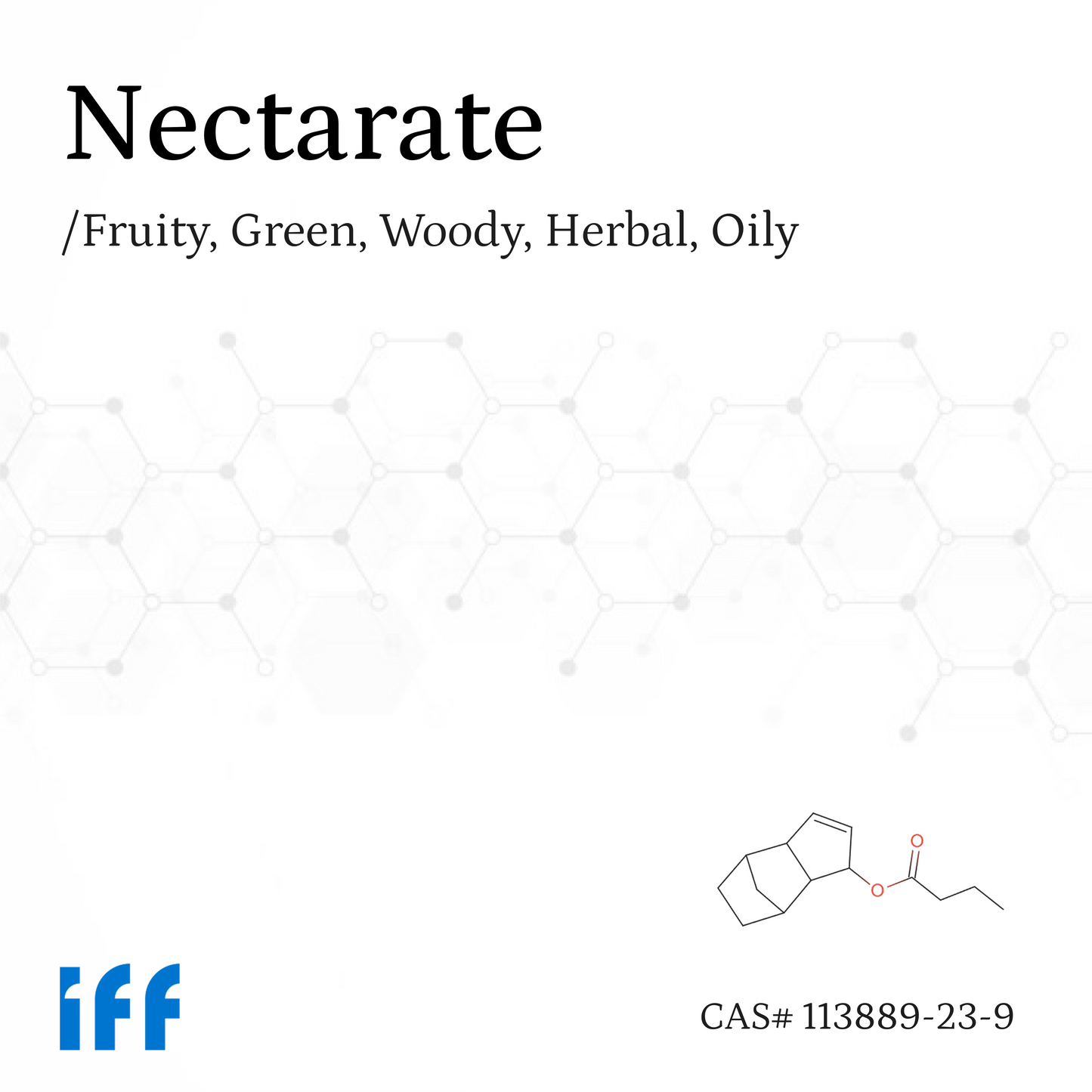
Nectarate Aroma Chemical
CAS# 113889-23-9

Fruity, Green, Woody, Herbal, Oily

Regular price $5
Regular price $0 Sale price $5
Sale Sold out
Size

In the modern world of perfumery, Nectarate stands out as a remarkable feat of synthetic “alchemy”-a point of pride and a proprietary ingredient closely associated with the renowned group IFF (International Flavors & Fragrances). Bearing the rather formidable chemical name 2,2,4-methyl-3-cyclohexen-1-yl propyl cyclopentanone, this man-made compound appears as a clear, sparkling liquid ranging from colorless to pale yellow. Its creation grew out of perfumers’ persistent search for fruit notes that are both long-lasting and able to withstand harsh, high-pH environments such as soaps and detergents-an area where many natural fruity esters fail because they evaporate too readily or break down quickly. For that reason, IFF positioned Nectarate as a breakthrough solution, representative of a newer generation of fragrance molecules-often described within the family of ketones or cyclic esters-delivering a convincingly natural effect and high performance across both fine fragrance and functional products.

Description

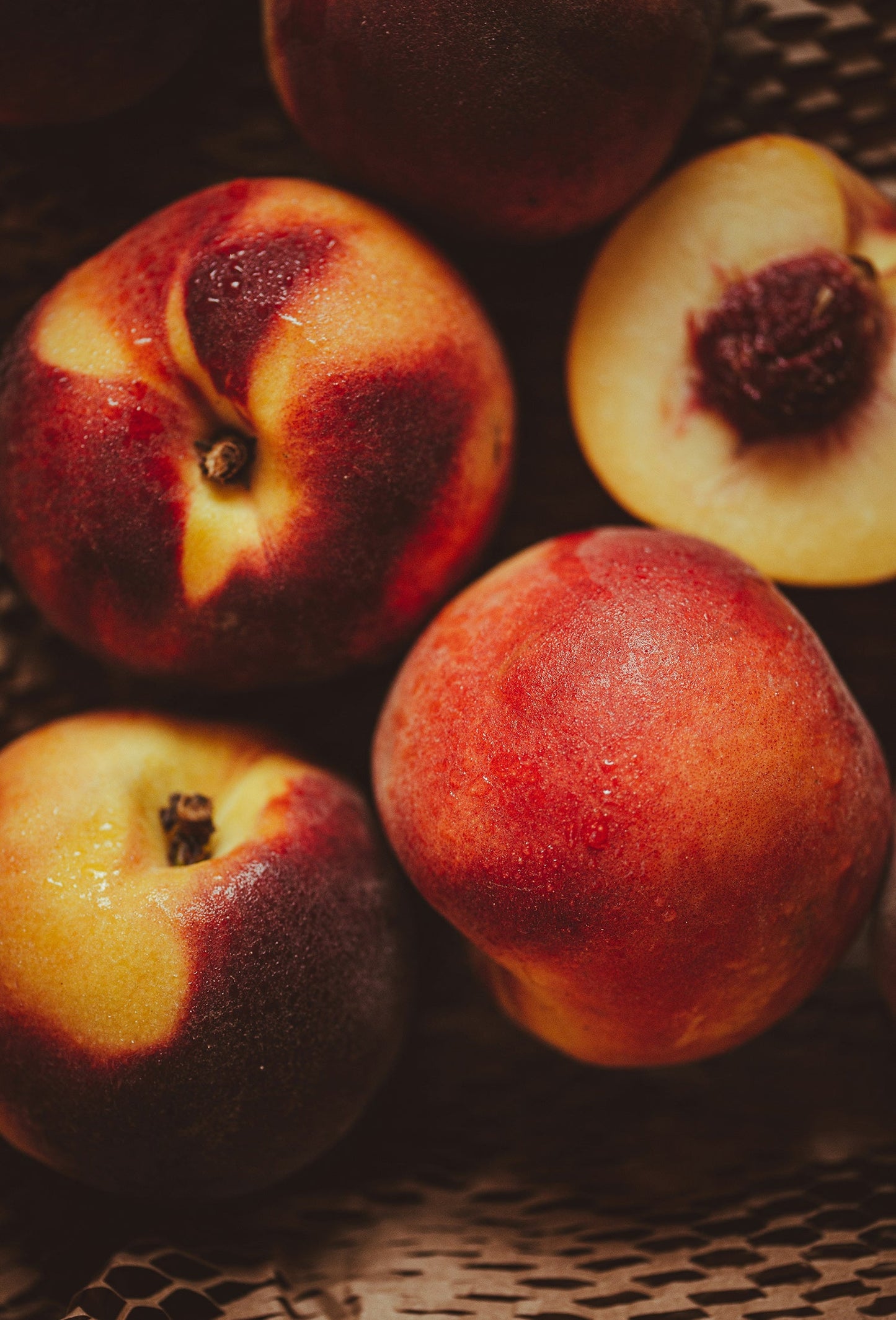
Belonging to the fruity family with strong peach and apricot character, Nectarate shines proudly from an extended heart note into the base, unfolding a vivid and lifelike olfactory picture. It reproduces, with surprising realism, the gentle sweetness of ripe peaches and apricots. Where Aldehyde C-14 gives a classic peach note that leans creamy-almost like peach cream-Nectarate instead awakens the senses with the impression of juicy fruit flesh, fresh and mouthwatering, with a subtle, alluring nuance reminiscent of natural fruit peel. Although its diffusion is only moderately strong, its tenacity is outstanding: it can linger on a blotter for days and clings firmly to both skin and fabric.

In composition, it functions as a versatile key for building the main theme of fruity and floral-fruity fragrances. It acts as a stable backbone that prolongs the life of volatile notes such as orange, lemon, or apple, and it can also lend roses or jasmine a softer, fuller, more sensual body. Enthusiasts often share classic pairing “recipes”: combined with the musk Galaxolide, it creates a clean, sweet skin effect; blended with Hedione, the fruit character seems to lift, bloom, and radiate further; and with a few drops of rose essential oil, a dewy, velvety-petal sweetness can emerge. While Nectarate is a fairly mobile liquid that can be used directly, perfumers often pre-dilute it in DPG or ethanol for easier weighing and handling in small-batch formulas.

Applications

Thanks to its flexible use and excellent chemical stability, Nectarate appears broadly-from bright, youthful, summery feminine perfumes to personal-care products such as shampoo, shower gel, and body lotion. It also extends into the home through scented candles and wax melts, and it particularly excels in laundry and cleaning products like detergents and fabric softeners.

From a safety standpoint, this molecule is commonly regarded as relatively mild, with a lower irritation profile than many classic fruity aldehydes, and it is generally described as not being on the list of substances strictly banned or heavily restricted by IFRA. Typical usage levels often range around 0.5–5% in a fragrance compound depending on the desired effect, though manufacturers are still advised to check the latest IFRA updates before commercial launch. To preserve quality, storage in a cool, dry place away from direct light is essential.

As a proprietary “favorite child” of IFF, Nectarate is often associated with creations from perfumers within the group for luxury brands. It is widely believed that modern peach or apricot fragrances released after 2000-often cited examples include Dolce & Gabbana The One or certain reinterpretations within the Lancôme Trésor line-may rely on Nectarate or closely related molecules to achieve a compelling juicy effect. Interestingly, because it appeared relatively late, this modern material is entirely absent from the classic 1969 reference Perfume and Flavor Chemicals by Steffen Arctander. However, to imagine the broader odor family, readers can look at Arctander’s descriptions of Gamma Undecalactone (Aldehyde C-14)-the classic peach material that Nectarate is often used to replace or support. Arctander praised it as an extremely powerful fruity peach odor with tremendous diffusion, noting it as one of the most frequently used lactones in fragrance formulas.

75 total reviews

Technical standards

Physical appearance Liquid Conform
Specific Gravity @20˚C 1.025 → 1.029 1.0273
Refractive Index @20˚C 1.483 → 1.487 1.4851

Solubility @25˚C

Solvent Solubility (g/L)
ethanol 2323.29
methanol 2578.41
isopropanol 2395.53
water 2.52
ethyl acetate 2256.43
n-propanol 1781.91
acetone 2705.42
n-butanol 1898.39
acetonitrile 1877.03
DMF 1912.7
toluene 1397.46
isobutanol 1605.05
1,4-dioxane 3909.28
methyl acetate 1465.98
THF 4204.62
2-butanone 1741.47
n-pentanol 976.23
sec-butanol 1491.58
n-hexane 130.66
ethylene glycol 304.77
NMP 1100.77
cyclohexane 410.36
DMSO 1453.41
n-butyl acetate 1406.79
n-octanol 398.17
chloroform 6192.96
n-propyl acetate 1052.27
acetic acid 1856.45
dichloromethane 4589.92
cyclohexanone 2391.59
propylene glycol 509.02
isopropyl acetate 1776.67
DMAc 1109.53
2-ethoxyethanol 1239.42
isopentanol 1834.25
n-heptane 63.34
ethyl formate 1162.74
1,2-dichloroethane 2526.3
n-hexanol 1134.74
2-methoxyethanol 2274.22
isobutyl acetate 798.96
tetrachloromethane 701.04
n-pentyl acetate 736.95
transcutol 4658.62
n-heptanol 400.63
ethylbenzene 489.66
MIBK 1322.92
2-propoxyethanol 1721.89
tert-butanol 1964.03
MTBE 2066.66
2-butoxyethanol 836.16
propionic acid 1041.01
o-xylene 575.68
formic acid 555.0
diethyl ether 2417.58
m-xylene 833.36
p-xylene 655.46
chlorobenzene 1632.3
dimethyl carbonate 643.39
n-octane 34.88
formamide 829.26
cyclopentanone 2166.31
2-pentanone 1865.12
anisole 1031.88
cyclopentyl methyl ether 1730.07
gamma-butyrolactone 2122.64
1-methoxy-2-propanol 1841.17
pyridine 2567.5
3-pentanone 1071.75
furfural 1810.87
n-dodecane 38.01
diethylene glycol 1262.23
diisopropyl ether 769.13
tert-amyl alcohol 1159.72
acetylacetone 1842.38
n-hexadecane 45.04
acetophenone 800.38
methyl propionate 1211.78
isopentyl acetate 1393.68
trichloroethylene 4498.0
n-nonanol 338.05
cyclohexanol 1624.55
benzyl alcohol 836.6
2-ethylhexanol 523.0
isooctanol 355.93
dipropyl ether 552.13
1,2-dichlorobenzene 1193.19
ethyl lactate 412.09
propylene carbonate 1404.43
n-methylformamide 1103.87
2-pentanol 1314.37
n-pentane 178.53
1-propoxy-2-propanol 1089.6
1-methoxy-2-propyl acetate 1270.91
2-(2-methoxypropoxy) propanol 760.32
mesitylene 496.39
ε-caprolactone 1874.42
p-cymene 241.58
epichlorohydrin 3012.55
1,1,1-trichloroethane 2300.84
2-aminoethanol 736.92
morpholine-4-carbaldehyde 1773.04
sulfolane 1516.67
2,2,4-trimethylpentane 98.78
2-methyltetrahydrofuran 2821.35
n-hexyl acetate 1018.85
isooctane 110.24
2-(2-butoxyethoxy)ethanol 1185.27
sec-butyl acetate 831.27
tert-butyl acetate 1448.21
decalin 147.61
glycerin 682.38
diglyme 2009.77
acrylic acid 899.33
isopropyl myristate 320.36
n-butyric acid 2215.5
acetyl acetate 1361.75
di(2-ethylhexyl) phthalate 314.88
ethyl propionate 815.88
nitromethane 2244.01
1,2-diethoxyethane 1596.26
benzonitrile 1341.2
trioctyl phosphate 210.59
1-bromopropane 1703.1
gamma-valerolactone 2633.57
n-decanol 242.39
triethyl phosphate 268.35
4-methyl-2-pentanol 802.01
propionitrile 1353.83
vinylene carbonate 1409.6
1,1,2-trichlorotrifluoroethane 1725.63
DMS 809.79
cumene 326.37
2-octanol 288.38
2-hexanone 1010.95
octyl acetate 395.01
limonene 338.03
1,2-dimethoxyethane 2072.88
ethyl orthosilicate 282.85
tributyl phosphate 284.86
diacetone alcohol 1180.99
N,N-dimethylaniline 513.22
acrylonitrile 1421.37
aniline 1441.5
1,3-propanediol 1389.49
bromobenzene 1794.65
dibromomethane 3083.63
1,1,2,2-tetrachloroethane 3459.33
2-methyl-cyclohexyl acetate 513.78
tetrabutyl urea 313.62
diisobutyl methanol 330.42
2-phenylethanol 860.82
styrene 722.75
dioctyl adipate 407.8
dimethyl sulfate 611.8
ethyl butyrate 740.48
methyl lactate 597.08
butyl lactate 507.55
diethyl carbonate 496.14
propanediol butyl ether 803.9
triethyl orthoformate 477.96
p-tert-butyltoluene 233.12
methyl 4-tert-butylbenzoate 543.59
morpholine 3824.94
tert-butylamine 1226.39
n-dodecanol 185.82
dimethoxymethane 1718.19
ethylene carbonate 1355.79
cyrene 533.64
2-ethoxyethyl acetate 1064.83
2-ethylhexyl acetate 912.54
1,2,4-trichlorobenzene 1308.65
4-methylpyridine 2526.12
dibutyl ether 571.47
2,6-dimethyl-4-heptanol 330.42
DEF 1351.54
dimethyl isosorbide 1001.08
tetrachloroethylene 2150.97
eugenol 602.53
triacetin 748.6
span 80 626.37
1,4-butanediol 476.21
1,1-dichloroethane 3161.88
2-methyl-1-pentanol 957.26
methyl formate 922.27
2-methyl-1-butanol 1437.61
n-decane 59.12
butyronitrile 1860.82
3,7-dimethyl-1-octanol 479.56
1-chlorooctane 283.86
1-chlorotetradecane 119.27
n-nonane 54.14
undecane 45.55
tert-butylcyclohexane 125.59
cyclooctane 115.71
cyclopentanol 1377.87
tetrahydropyran 3943.15
tert-amyl methyl ether 939.43
2,5,8-trioxanonane 1181.11
1-hexene 556.73
2-isopropoxyethanol 951.77
2,2,2-trifluoroethanol 678.61
methyl butyrate 1099.79

Scent© AI

View full details
  • CAS NUMBER

    113889-23-9

  • FAMILIES

    Fruity

  • BRAND

    IFF

  • EVAPORATION RATE

    Slow

  • Odor impact

    Medium est.

  • FLASH POINT

    118.09 ˚C est.

heart base
Fruity
Green
Woody
Herbal
Oily
Recommendation
No restriction
Maximum acceptable concentrations in the finished product (%)
Category 1
Products applied to the lips
No restriction Category 7A
Rinse-off products applied to the hair with some hand contact
No restriction
Category 2
Products applied to the axillae
No restriction Category 7B
Leave-on products applied to the hair with some hand contact
No restriction
Category 3
Products applied to the face/body using fingertips
No restriction Category 8
Products with significant anogenital exposure
No restriction
Category 4
Products related to fine fragrance
No restriction Category 9
Products with body and hand exposure, primarily rinse off
No restriction
Category 5A
Body lotion products applied to the body using the hands (palms), primarily leave on
No restriction Category 10A
Household care products with mostly hand contact
No restriction
Category 5B
Face moisturizer products applied to the face using the hands (palms), primarily leave on
No restriction Category 10B
Household care products with mostly hand contact, including aerosol/spray products (with potential leave-on skin contact)
No restriction
Category 5C
Hand cream products applied to the hands using the hands (palms), primarily leave on
No restriction Category 11A
Products with intended skin contact but minimal transfer of fragrance to skin from inert substrate without UV exposure
No restriction
Category 5D
Baby Creams, baby Oils and baby talc
No restriction Category 11B
Products with intended skin contact but minimal transfer of fragrance to skin from inert substrate with potential UV exposure
No restriction
Category 6
Products with oral and lip exposure
No restriction Category 12
Products not intended for direct skin contact, minimal or insignificant transfer to skin
No restriction
  • All orders will be processed within 1-2 business days from the time the order is confirmed.
  • Free shipping is available for orders valued at $500 or more.
  • Delivery time is 1-3 business days for local areas, 3-7 days for suburban and nationwide deliveries, and 1-4 weeks for international orders.
  • You have 30 days from the date of receipt to initiate the return process.
1 of 4
  • Certificate of Analysis (COA)

    Provides information on the physical and chemical properties of the product.
    Download  
  • IFRA Certificate of Conformity

    Sets safety standards and guidelines for the product in manufacturing.
    Download  
  • Safety Data Sheet (SDS)

    Provides important safety guidelines for transporting, storing, and using the product.
    Download  
1 of 3